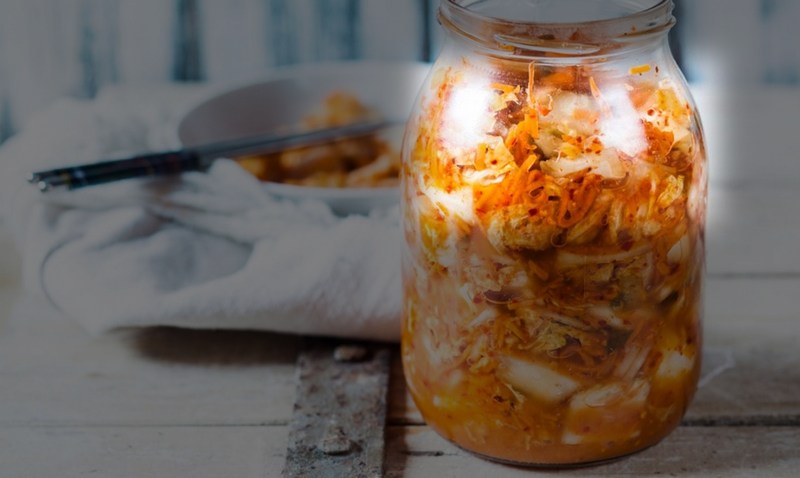
Do not turn an improvised kimchi recipe into a shelf-stable canned product by adding an unspecified amount of vinegar and boiling the jars. Fermentation, refrigeration, and heat-processing for shelf storage are different preservation methods. A sour taste or a lid that seals does not validate a home-canning process.
Safety correction: This page previously described adding a little vinegar and water-bath processing for 20–30 minutes. Those instructions were not supported by a tested process and have been withdrawn. Do not use that earlier method for pantry storage.
Why a generic water-bath time is insufficient
NCHFP explains that safe processing depends on the exact food, acidity, thickness, solid-to-liquid ratio, preparation, and jar. Changing a recipe can change how heat reaches the slowest-heating part. More time, extra vinegar, or a different canner cannot be assumed to compensate for an untested mixture.
This guide does not provide a validated home-canning schedule for kimchi. If you want a shelf-stable version, ask a food-preservation Extension specialist for a researched procedure that matches the recipe and equipment. Follow its ingredient quantities, jar size, preparation, and altitude directions exactly. A commercial shelf-stable product does not establish an equivalent home method.
A practical refrigerated route
Colorado State University’s Understanding and Making Kimchi provides a specific cabbage-kimchi recipe with fermentation and refrigerated storage directions. Use that complete recipe rather than borrowing only its final storage step for an unrelated mixture.
- Read the whole recipe and prepare the listed ingredients, clean equipment, and a suitable food-contact container.
- Follow its salting, preparation, packing, and fermentation instructions. Do not replace measured quantities with a taste-based guess.
- Use the container capacity and fill allowance specified by the method. Fermentation produces gas; a fermenting jar is not a pantry-stable canned jar.
- Keep the finished kimchi refrigerated as directed. CSU advises refrigerated storage and gives its best-quality guidance for that preparation.
- Use clean utensils, retain a preparation date, and discard a batch with surface mold or a questionable preparation or storage history.
The CSU method includes a refrigerated fermentation option. That can be a useful starting point when a warm kitchen makes temperature control difficult. Follow its full instructions; this page does not replace them with a universal number of days for every kimchi.
Choose storage before making a large batch
| What you have | What to do |
|---|---|
| Refrigerated commercial kimchi | Keep it cold and follow its label, including instructions after opening. |
| Homemade kimchi from a reliable refrigerated recipe | Follow that recipe’s full preparation and storage method; make a quantity your refrigerator can hold. |
| An improvised mixture you want to can | Do not invent a processing schedule. Obtain a matching tested process or choose a suitable refrigerated recipe instead. |
| A jar processed using the withdrawn method | Do not treat the sealed lid as proof of safety or taste it to check. Seek current Extension advice on safe handling and disposal. |
Common questions
Does a low pH reading make any recipe safe to can?
No. Acidity is only part of process validation. NCHFP also identifies heat penetration, consistency, jar dimensions, and preparation as relevant. A home measurement is not a substitute for a tested processing schedule.
Does longer fermentation guarantee better or safer kimchi?
No. Use the method’s conditions and storage advice. A fixed promise of months in the refrigerator or years in the pantry is not justified for every homemade batch.
Should I buy canning equipment for this method?
Equipment alone does not supply a safe process. Resolve the recipe and preservation method first; no canner purchase is needed to follow an appropriate refrigerated kimchi recipe.
Sources
- NCHFP: why canning processes are specific to a food and preparation
- Colorado State University: Understanding and Making Kimchi (PDF)
- Illinois Extension: tested recipes and acid quantities
Food reference image