
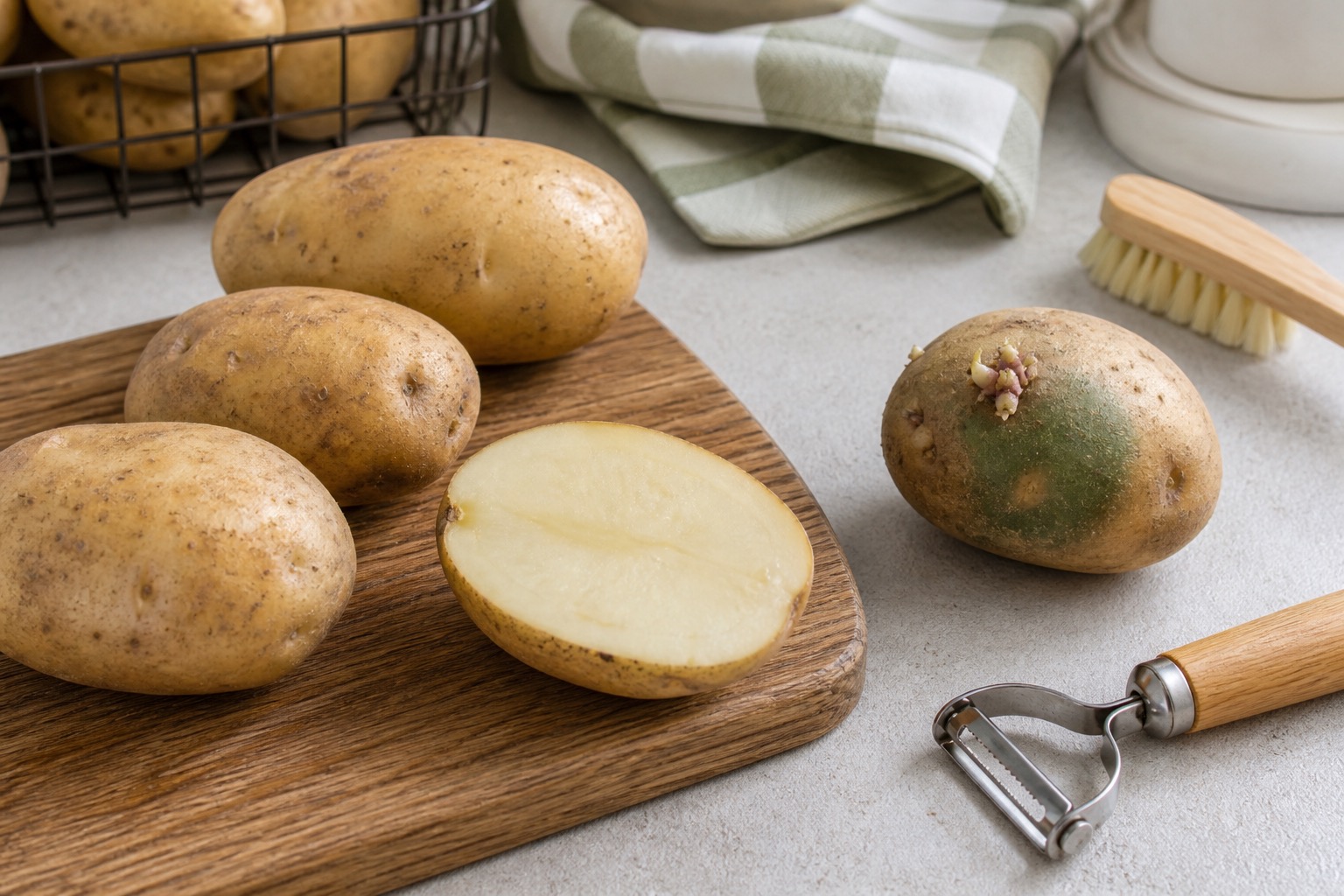
Raw potatoes are not a good everyday food, and green, bitter, moldy, soft, or badly sprouted potatoes should be discarded. A small bite of clean raw potato is usually not the main concern, but raw potatoes are starchy, unpleasant for many people, and safer to use after proper sorting, washing, and cooking.
Quick Safety Check
| Potato condition | What to do | Why it matters |
|---|---|---|
| Firm potato, no green color, no bad smell | Wash, peel or trim if needed, then cook | This is the normal low-risk starting point |
| Small sprouts on a firm potato | Cut out sprouts and eyes before cooking | Small sprouts can be trimmed from an otherwise sound potato |
| Green skin or green flesh | Discard, especially if the greening is widespread | Green color can signal higher glycoalkaloids such as solanine |
| Bitter taste | Stop eating and discard | Bitterness is a warning sign, not a flavor to cover up |
| Soft, shriveled, wet, moldy, or rotten | Discard | Spoiled potatoes are not worth salvaging |
Why Raw Potatoes Are Not the Best Choice
Raw potatoes are dense, starchy, and harder to chew and digest than cooked potatoes. Cooking improves texture and makes potatoes more useful in normal meals. Cooking does not make a green, bitter, rotten, or moldy potato a good choice, so sort the potatoes first.
Green Potatoes and Sprouts
Green potato skin or flesh should be treated seriously. Michigan State University Extension explains that greening can be associated with higher levels of glycoalkaloids such as solanine. If the potato is green over a broad area or tastes bitter, discard it. If a potato is still firm with only small sprouts, trim the sprouts and eyes before cooking.
How to Handle Raw Potatoes Safely
- Inspect first. Set aside green, bitter, moldy, soft, wet, or badly sprouted potatoes.
- Wash before cutting. Rinse potatoes under running water and scrub with a clean vegetable brush.
- Trim small defects. Cut out small eyes, tiny sprouts, bruises, or rough patches from otherwise sound potatoes.
- Cook for normal meals. Bake, boil, roast, steam, or fry potatoes after sorting and washing.
- Store correctly. Keep potatoes in a cool, dark, well-ventilated place so they are less likely to green or sprout heavily.
Raw Potato vs Cooked Potato
Cooked potatoes are the better choice for texture, flavor, and everyday use. Raw potato slices may appear in a taste test or accidental bite, but they are not a practical substitute for cooked potatoes in salads, sides, soups, or main dishes.
FAQ
Are raw potatoes bad for you?
A small bite of raw potato is not usually the issue, but raw potatoes are starchy, hard to digest, and should not be eaten if they are green, bitter, badly sprouted, soft, moldy, or spoiled.
Can you eat green potatoes?
Do not eat green potato skin or green flesh. Greening can signal higher glycoalkaloids such as solanine, and cooking does not reliably remove that risk.
Can you cook sprouted potatoes?
You can cook a firm potato after cutting away small sprouts and eyes, but discard potatoes with heavy sprouting, green areas, softness, mold, or a bitter taste.
Does cooking make potatoes safer?
Cooking improves texture and digestibility, but it does not fix a potato that is green, bitter, moldy, or badly sprouted. Sort those out before cooking.
How should raw potatoes be stored?
Store potatoes in a cool, dark, well-ventilated place away from light. Do not store them where they turn green or sprout heavily.