
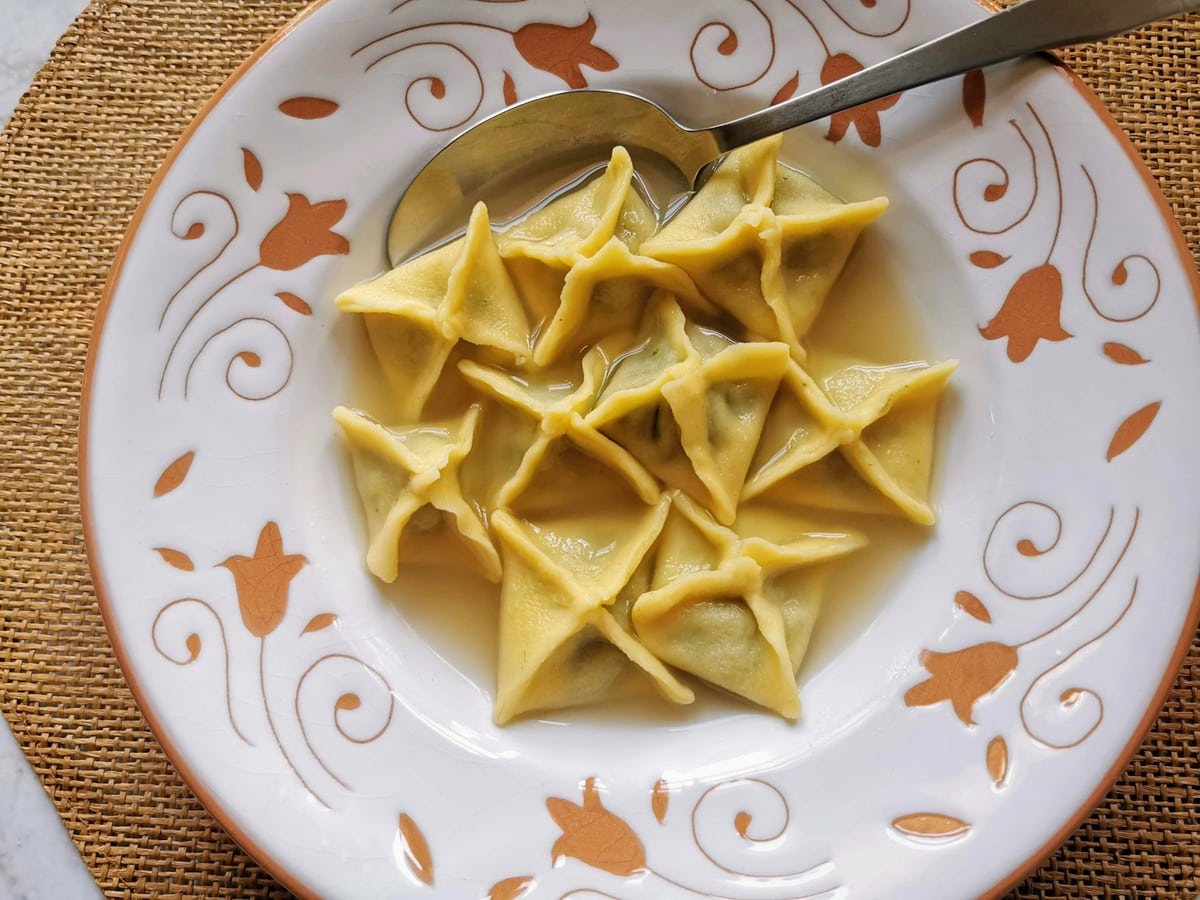
Sacchetti is filled pasta shaped like a small gathered purse. The filling and whether the pasta is fresh, frozen or dried determine how to cook it. Start with the package directions rather than a single cooking time for the shape.
Shape and filling: what to look for
The closed pouch distinguishes sacchetti from flat ravioli and ring-shaped tortellini. Fillings vary between makers: cheese, mushroom or meat descriptions are product choices, not a definition of every sacchetti. Read the ingredients and allergen statement on the actual pack.
For a documented example, Joseph’s Four Cheese Sacchetti, item 25007, contains ricotta, mozzarella, Parmesan and Pecorino Romano in egg pasta. Its maker lists it as frozen and not ready to eat. This identifies one product; it does not establish the ingredients of another brand.
How to cook it without using the wrong timing
- Check whether your pack says cook from frozen, thaw first or cook from fresh. Keep the pasta stored as directed until needed.
- Use the water quantity and boil specified by that maker. Add the pasta carefully and stir gently so pieces do not stick together.
- Use the stated cooking time and any doneness or temperature instruction. Floating alone is not a universal check for every filling.
- Lift the cooked pouches carefully, drain, and fold them into sauce without vigorous tossing.
Joseph’s instructions for item 25007 give approximately 4½–5 minutes from frozen in boiling water. That is a product-specific example, not a timing recommendation for all sacchetti. A homemade meat filling or another frozen brand can require a different process.
Choosing a sauce and a substitute
Let the filling guide the sauce. Nuovo’s four-cheese sacchetti recipe uses garlic butter and parsley. Add sauce a little at a time so the filling is still noticeable. For a richer meat filling, a simple tomato sauce may suit your dish better.
If sacchetti is unavailable, filled ravioli or tortellini with a similar filling can serve the same meal role. Use the replacement pack’s cooking directions; shape alone does not make timings interchangeable. For pan choice, see our skillet materials and size guide.
Lift the pasta gently with the tool you already have
A slotted spoon or pasta spider lets you transfer filled pouches without tipping a heavy pot. There is no need to buy one if your existing utensil works.
- Choose a head wide enough to support the pouch.
- For a nonstick pan, check that the utensil material is suitable for its coating.
- Check handle length, drainage holes and cleaning instructions.
Affiliate disclosure: As an Amazon Associate I earn from qualifying purchases.
Compare slotted spoons and pasta spiders on Amazon (paid link)
This opens Amazon search results, which can include different products and sellers. Check the selected item, current price, dimensions and return terms. No product has been tested for this guide.
Common questions
Is sacchetti the same as tortellini?
No. Both can be filled pasta, but sacchetti has a gathered pouch shape and tortellini is folded into a ring.
What does sacchetti mean?
The name refers to little sacks or bags, describing the small gathered pasta pouches.
What sauce goes best with sacchetti?
Choose a sauce that suits the filling. Brown butter and sage are one cheese-filled option; a light tomato sauce is another. Add sauce gradually so the filling remains noticeable.
Can you freeze sacchetti pasta?
Some commercial sacchetti is supplied frozen. Keep it as the label directs and use its cooking instructions; do not assume a fresh product has the same method or storage life.
How do you keep sacchetti from breaking?
Follow the specified boil and cooking time, stir carefully, avoid crowding, and lift the pieces with a slotted spoon. Do not substitute a universal simmer rule for the package instructions.
Basis of this guide: the manufacturer product and recipe pages linked above. Cooking examples are attributed to those products; they are not results of an independent kitchen test.