
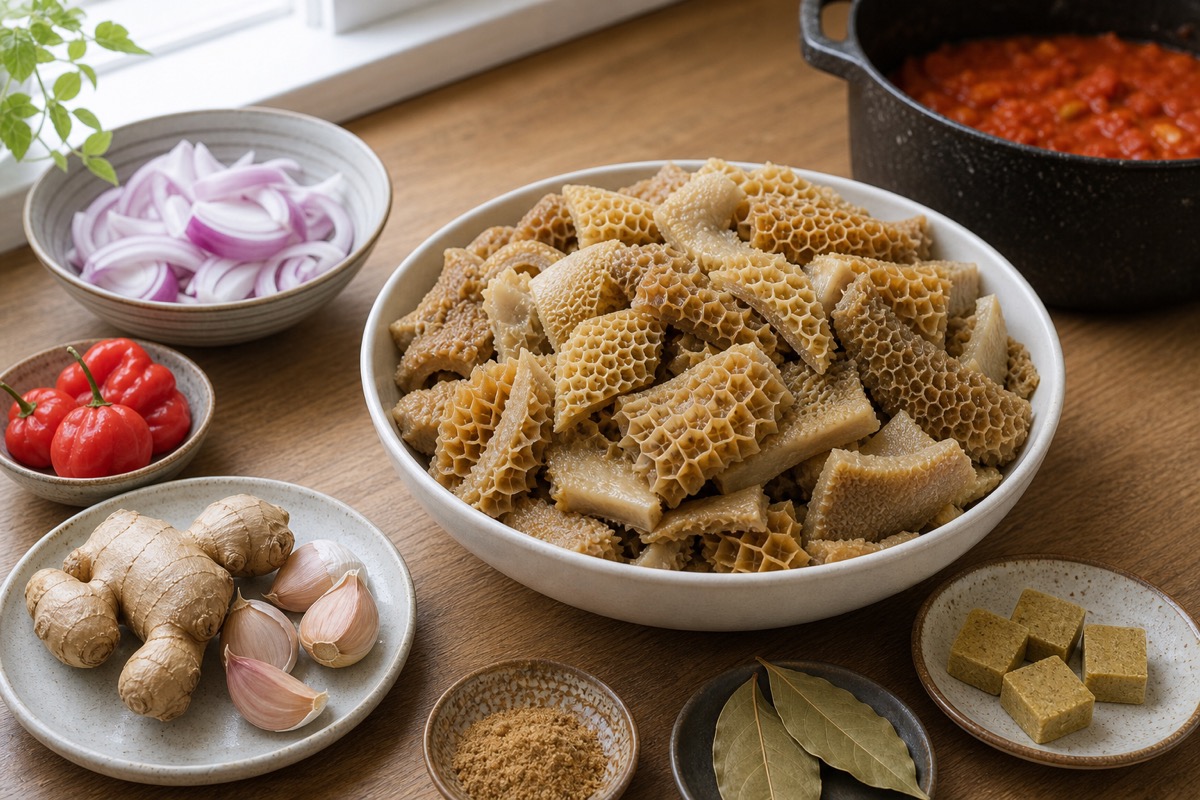
Shaki meat is cow tripe, the edible lining of a cow’s stomach, and it is common in Nigerian soups, stews, pepper soup, and assorted meat dishes. It is not a quick-cooking steak-style cut. The best result comes from buying cleaned tripe, rinsing it well, simmering it until tender, then adding it to the final sauce or soup.
Quick Answer
| Question | Answer |
|---|---|
| What is shaki? | Shaki is cow or beef tripe, especially in Nigerian cooking. |
| Texture | Chewy, bouncy, and tender only after slow moist cooking. |
| Common uses | Pepper soup, egusi soup, efo riro, stew, jollof sides, and assorted meat plates. |
| Best cooking method | Rinse, parboil or simmer with aromatics, then finish in soup or stew. |
| Storage rule | Refrigerate cooked shaki within 2 hours and use leftovers within 3 to 4 days. |
What Is Shaki Meat?
In Nigerian food writing and home cooking, shaki usually means tripe from cattle. Depending on the market, you may see honeycomb tripe, blanket tripe, or a mix of cleaned tripe pieces. Honeycomb tripe has a visible honeycomb pattern and often cooks up more tender than smoother, thicker pieces.
The old mistake to avoid is treating shaki like a tender beef muscle. It is a variety meat with a firm connective texture. That is why most good preparations use moist heat: boiling, simmering, pressure cooking, or long braising before the shaki goes into a peppery sauce.
How to Buy and Prep Shaki
- Buy from a reliable butcher or market: choose tripe that is already cleaned and kept cold.
- Check the smell: mild meaty odor is normal; sour, rotten, or ammonia-like smells are a discard sign.
- Rinse before cooking: rinse under cool running water and trim any tough or ragged pieces.
- Keep raw juices contained: use a separate board or washable tray and clean surfaces after handling.
- Do not rely on rinsing for safety: rinsing removes surface residue, but thorough cooking and clean handling matter more.
How to Cook Shaki Until Tender
- Put cleaned shaki in a pot with water, sliced onion, ginger, garlic, bay leaf, pepper, and a modest amount of salt or seasoning.
- Bring to a boil, skim foam if needed, then reduce to a steady simmer.
- Cook until a fork goes through the thickest pieces with little resistance. Cleaned shaki often needs about 45 minutes to 2 hours, depending on thickness and whether it was pre-cooked.
- Drain or reserve the cooking liquid if it tastes clean and balanced. Add the tender shaki to stew, pepper soup, egusi, efo riro, or another final dish.
- Taste before adding more seasoning. Shaki dishes can become salty quickly when seasoning cubes, stock, dried fish, or salty broth are used together.
Can You Pressure Cook Shaki?
Yes. A pressure cooker is useful when the pieces are thick or very chewy. Start with enough liquid for your cooker, follow the manufacturer’s fill limit, and use a natural release if the recipe calls for it. Many cleaned tripe pieces soften in about 20 to 35 minutes under pressure, but time varies by cut and cooker.
Food Safety Notes
Treat raw shaki like raw meat. Keep it refrigerated before cooking, keep raw juices away from vegetables and ready-to-eat foods, and wash hands, knives, boards, and counters after prep. FDA’s basic food-safety guidance centers on clean, separate, cook, and chill; those four habits matter more than any seasoning choice.
For a stew or soup that already contains cooked shaki, reheat leftovers to 165 degrees F. Refrigerate cooked shaki in shallow covered containers within 2 hours, or within 1 hour if the room is hotter than 90 degrees F. Use refrigerated leftovers within 3 to 4 days, or freeze portions for longer storage.
What Can You Substitute for Shaki?
| Substitute | Best use | What changes |
|---|---|---|
| Honeycomb tripe | Closest swap when a recipe just says shaki | Usually the same food category, with a clear honeycomb texture. |
| Beef tendon | Soups and stews where chewiness is welcome | More gelatinous and less honeycomb-like. |
| Beef tongue | Assorted meat plates after simmering and peeling | Richer, smoother, and more sliceable. |
| Stewing beef | When you want beef flavor without offal texture | Less traditional for shaki-specific dishes, but easier for some eaters. |
| Mushrooms | Vegetarian-style stews | No tripe flavor, but mushrooms add chew and savory depth. |
FAQ
What is shaki meat?
Shaki meat is cow or beef tripe, the edible lining of a cow stomach. In Nigerian cooking, it is usually simmered until tender and added to soups, pepper soup, stews, or assorted meat dishes.
Is shaki the same as tripe?
Yes. Shaki is a Nigerian name for cow tripe. The exact texture can vary depending on the tripe type and how long it was cleaned, parboiled, simmered, or pressure cooked.
How long does shaki take to cook?
Cleaned shaki often takes about 45 minutes to 2 hours of gentle simmering, depending on thickness and whether it was pre-cooked. A pressure cooker can shorten the time, but cook until tender and safely hot.
How do you store cooked shaki?
Refrigerate cooked shaki in a covered shallow container within 2 hours, or within 1 hour in hot weather. Use it within 3 to 4 days and reheat leftovers to 165 degrees F.
Is shaki healthy?
Shaki is a protein-containing variety meat, but it is not a magic health food. Portion size, added oil, salt, seasoning cubes, sauces, and the rest of the meal matter.