Can Chicken Be a Little Pink? A Comprehensive Guide to Safe Poultry Cooking Techniques

– The USDA recommends cooking poultry, including chicken, to an internal temperature of 165°F.
– Clear juices indicate that the chicken is fully cooked, while red or pinkish juices may mean that it needs more cooking time.
– Observing just the exterior color of the meat can be misleading and may not indicate if it is properly cooked.
– Cooking chicken without a thermometer can be risky.
– Eating undercooked chicken can lead to foodborne illness or infection.
– Raw chicken is riddled with bacteria, including Salmonella, Campylobacter, and Clostridium perfringens.
– Undercooked chicken can still contain harmful bacteria present in the juices.
– The CDC estimates that 1 in 25 packages of chicken contains Salmonella.
– It is not safe to eat even slightly undercooked chicken, so it is best to cook it thoroughly.

Continue Reading

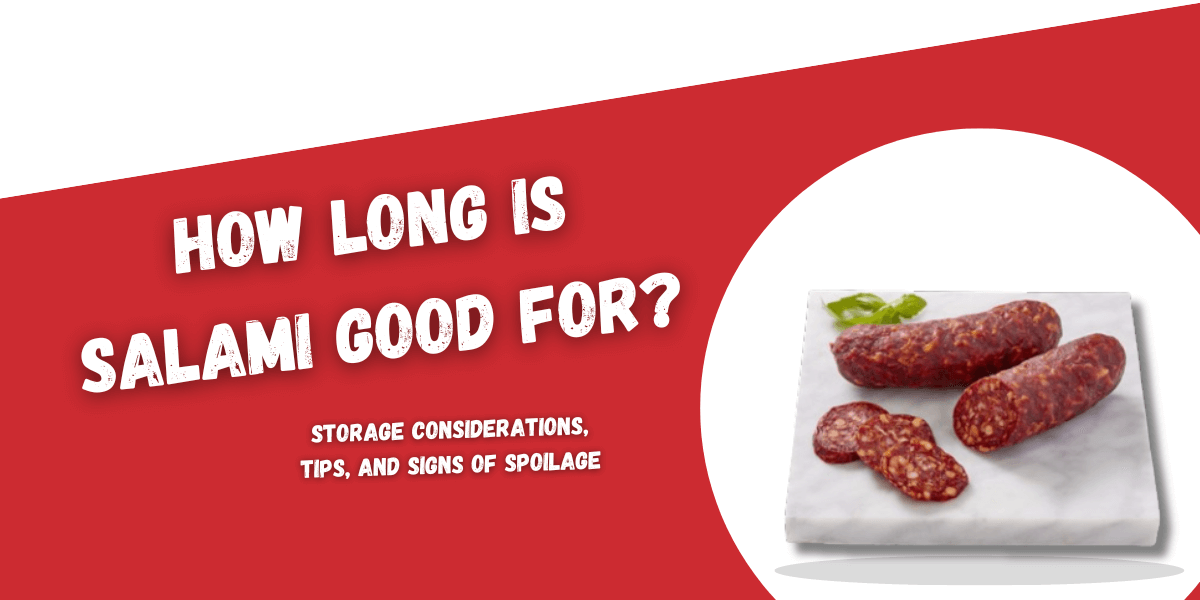
How long is salami good for: health guidelines and storage tips

List of pertinent information about how long salami is good for:

1. Dry salami can last up to six weeks unrefrigerated if unopened.
2. Dry salami can last “indefinitely” in the refrigerator if unopened.
3. Sliced dry salami can last up to three weeks in the refrigerator.
4. Sliced dry salami can last up to two months in the freezer.
5. Cooked salami can last up to two weeks in the refrigerator if unopened.
6. Cooked salami can last up to seven days after opening in the refrigerator.
7. Frozen cooked salami can last up to two months.
8. Salami should be discarded if left out at room temperature for more than two hours.
9. Signs that salami has gone bad include changes in color, such as black, green, grey, or brown fuzzy spots.
10. The smell of spoiled salami can resemble sewage or rotten eggs.
11. Spoiled salami can have a change in texture, becoming extra hard and dry or wet and slimy.
12. Consuming spoiled salami can lead to food poisoning symptoms, including nausea, vomiting, diarrhea, fever, body pain, and chills.
13. Mild cases of food poisoning from spoiled salami may resolve on their own, but severe symptoms may require medical treatment, including confinement and IV drip if necessary.

Continue Reading

Is it safe to eat cooked chicken left out for 4 hours? The definitive answer for your food safety concerns!

– Eating chicken that has been left out for more than 2 hours can lead to food poisoning.
– Symptoms of food poisoning from chicken left out include headaches, nausea, vomiting, and diarrhea.
– It is important to store cooked chicken in the fridge or freezer within 2 hours of cooking.
– Cooked chicken can last for 3 to 4 days in the fridge and 2 to 6 months in the freezer.
– Store cooked chicken away from raw chicken in the fridge to prevent cross-contamination.
– Safely cooling and storing cooked chicken allows for a few additional days of enjoyment.
– Visual indicators of spoilage cannot determine if cooked chicken is safe to eat.
– Reheating cooked chicken does not make it safe to consume.
– Cooked chicken should not be left out at room temperature for more than 2 hours or 1 hour in temperatures above 90°F.

Continue Reading

Can cream cheese be left out and still safe? Tips for proper storage and potential risks explained

– Cream cheese can sit at room temperature for up to two hours before it should no longer be eaten or used.
– An unopened pack of cream cheese can last between two to three weeks past the printed expiration date in the fridge.
– Once opened, cream cheese will last up to 10 days in the fridge if stored in an airtight container.
– Cream cheese can be frozen, but it may have a grainy texture. However, it is fine to freeze if the texture doesn’t matter for the intended use.
– Cream cheese will last up to two months in the freezer if the packaging is intact, or it can be placed in a zip-top bag for protection if it has been opened.
– Cream cheese frosting, including baked goods made with cream cheese, should be refrigerated within two hours according to the FDA.

Continue Reading

Sell by date on chicken: Understanding its importance and implications

– The “Chicken Sell By Date” is a guideline for retailers indicating how long to display the chicken for sale.
– It’s also important for consumers to determine if the chicken is safe to eat.
– The Sell-By Date marks the final day the product should be sold, but it can still be consumed safely if properly stored and shows no signs of spoilage.
– The Use-By Date is the last date recommended for using the chicken at its peak quality, but it may still be safe to eat after this date with some degradation in quality.
– The Expiration Date is a clear deadline indicating when the chicken will likely become unsafe to consume.
– Freezing the chicken before the expiration date can extend its safe consumption period.
– Raw chicken is usually good for 1-2 days.
– Chicken can be stored in the refrigerator past its sell-by date if you plan to cook it within 1-2 days.
– Freezing chicken extends its safe consumption period by halting the growth of bacteria.
– Cooked chicken can be stored in the refrigerator for about 3-4 days.
– Cooked chicken can be frozen and stored for about 2-3 months.
– Leftovers should be promptly refrigerated or frozen within two hours of cooking.
– Fresh chicken should be pinkish in color and free from a strong, unpleasant odor.
– Grayish hue, slimy texture, or a strong foul smell indicates that chicken has gone bad and should not be consumed.
– Chicken should be cooked to an internal temperature of at least 165°F (74°C) to kill bacteria.
– Leftover cooked chicken can be stored in the refrigerator for 3-4 days or frozen for about 4 months.
– The sell-by date on raw chicken is a guide for retailers, not consumers.
– Chicken is usually safe to eat within 1-2 days past the sell-by date if it has been properly stored in the fridge.
– Freezing chicken does not extend the expiration date, but it can pause the spoiling process.
– Thawed chicken should be used immediately and not refrozen.
– The sell-by date is not foolproof, and it’s important to physically examine the chicken for any signs of spoilage before consuming.
– Chicken should be used within 1-2 days of placing it in the fridge, regardless of the sell-by date.
– Chicken is typically safe to consume for 1-2 days after the sell-by date if it has been stored correctly in the refrigerator.
– It’s best to cook or freeze chicken as soon as possible after the sell-by date to ensure safety and quality.
– Cooking chicken within 1-2 days after purchasing is usually recommended for best results.
– Storing raw chicken in the refrigerator past its sell-by date is safe for 1-2 days, but it is best to freeze it if you won’t be cooking it within that time.
– Freezing raw chicken extends its safe consumption period by halting the growth of bacteria.
– Cooked chicken stored in the refrigerator is safe for consumption for about 3-4 days.
– Cooked chicken can be frozen for 2-3 months.
– It is important to refrigerate or freeze leftovers within two hours of cooking to minimize bacterial growth.
– Checking the freshness of chicken before cooking is important – look for a pinkish color and no strong or unpleasant odor.
– It is essential to cook chicken to an internal temperature of at least 165°F (74°C) to ensure safety.
– Leftover cooked chicken can be stored in the refrigerator for 3-4 days or frozen for up to four months.
– The sell-by date on raw chicken is a guide for retailers, not consumers.
– It is usually safe to eat chicken within a couple of days past this date if it has been properly stored in the fridge.
– Freezing chicken pauses the spoiling process but does not extend the expiration date.
– Thawed chicken should be used immediately and not refrozen.
– The sell-by date is a good indicator but not foolproof.
– It’s important to physically examine the chicken for an off smell, slimy texture, or grayish color.
– Chicken should be used within 1-2 days of being placed in the fridge, regardless of the sell-by date.
– It is recommended to cook or freeze chicken as soon as possible after the sell-by date to ensure safety and quality.
– It is important to track how long chicken has been in the refrigerator to ensure freshness and prevent spoilage.
– A simple way to track the time is to write the purchase date or the date the chicken was put in the fridge on the packaging.
– Chicken that has gone bad can change color, become dull or grayish, and develop a slimy texture.
– A foul or off-putting smell is another clear sign that the chicken is no longer good to eat.
– The sell-by date is just a guideline for retailers, it is important to check the chicken’s color, smell, and texture.
– Fresh chicken should be pinkish, have a mild odor or no noticeable smell, and should not be slimy.
– To keep chicken fresh, it should be stored properly in the refrigerator at a temperature below 40°F if it will be used within one to two days.
– If the chicken will not be used within that time, it is best to freeze it in airtight packaging to preserve its quality and prevent freezer burn.

Continue Reading

Internal Temp Hamburger: Ensuring Safe and Delicious Cooking

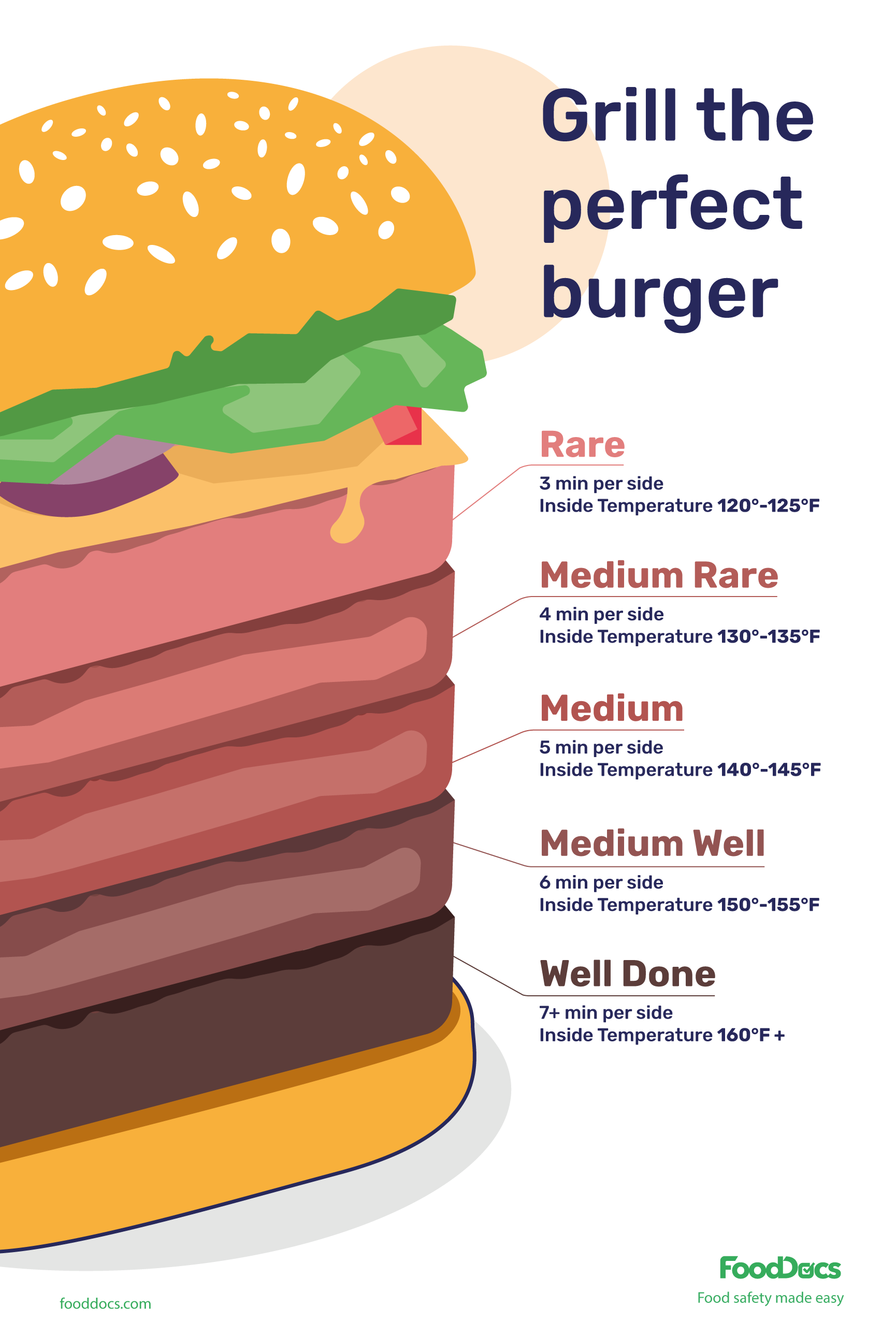
– The article provides a burger temperature chart for cooking beef burgers to the perfect internal temperature.
– The chart includes the internal temperature and cooking time for different levels of doneness: medium-rare (130-135°F, 6 minutes), medium (145°F, 7-8 minutes), medium-well (150-155°F, 9 minutes), and well-done (160-165°F, 10 minutes).
– The USDA recommends cooking ground beef to at least 160°F for food safety.
– Medium-rare burgers are brown on the outside but still very pink in the middle, and they are considered super juicy and flavorful.
– Medium burgers are slightly longer cooked but still have a pink middle, providing juicy and flavorful beef.
– Medium-well burgers have a small amount of pink in the middle and should be watched closely during cooking.
– Ground beef should be cooked to well-done according to safety guidelines from the USDA.
– The best and most accurate way to determine when a burger is done is to use an instant-read meat thermometer.
– A well-done burger will have no pink in the middle.
– Burgers are safe to eat anywhere from medium-rare to well-done.
– The cooking time for burgers depends on the desired level of doneness.
– The perfect burger temperature depends on personal preference.
– The thickness of the burger patties affects cooking time and doneness level.
– Ground chicken or turkey should be cooked to an internal temperature of 160-165°F.
– The USDA mandates that pre-ground meat must be cooked to an internal temperature of 160°F to ensure food safety.
– Ground poultry must be cooked to a temperature of 165°F to be considered safe.
– Bacteria on whole cuts of meat are mainly on the surface and do not migrate inside, so steaks can be eaten at a medium-rare temperature of 130°F.
– When ground meat is made from whole cuts, the bacteria mixes throughout the meat, so it must be cooked to 160°F in the middle to kill any bacteria.
– Ground beef is more susceptible to contamination than whole cuts due to the process of grinding and processing, which distributes bacteria throughout the meat.
– Grocery stores and restaurants can serve contaminated meat if multiple cows are processed into one batch of ground beef.
– Chefs have different opinions on the USDA guidelines for cooking ground meat.
– Restaurants must adhere to USDA guidelines and work with health departments to create a Hazard Analysis and Critical Control Point (HACCP) plan.
– To serve a medium-rare burger, the meat must be ground in-house; pre-ground meat must be cooked to 160°F.
– Tips to reduce the risk of contamination when preparing burgers include keeping ground beef cold, using separate prep areas for raw meat and produce, and washing hands before and after handling raw meat.
– Grinding your own meat allows you to have control over what goes into your burger and experiment with different flavor combinations.
– Grinding meat at home is cost-effective and can save money compared to buying pre-ground meat.
– Any ground beef under 160°F is considered unsafe according to USDA standards.
– Different levels of doneness for burgers include well-done (160°F to 165°F), medium-well (150°F to 155°F), medium (140°F to 145°F), medium-rare (130°F to 135°F), and rare (120°F to 125°F).
– The article suggests using a two-stage cooking method for burgers to achieve the perfect doneness.
– Grilling burgers from frozen can yield good results.
– The two-stage method of cooking burgers on a grill involves initially cooking them on the unheated side of the grill, then moving them to the high-heat side to sear until the desired temperature is reached.

Continue Reading

How Long Can Mayo Sit Out? Safety Guide

– Mayonnaise contains eggs and should be stored properly to avoid foodborne illness.
– Mayo should ideally be stored in the fridge or served immediately.
– Mayo should not be left out at room temperature for more than two hours.
– Mayo stored at 50°F or more should be discarded after 8 hours.
– Commercial mayonnaises are shelf-stable before opening but should be refrigerated after opening.
– Open mayo should be stored in the fridge and discarded after 2 months.
– Homemade mayonnaise should be stored in the fridge for up to 1 week if made with raw eggs.
– Homemade mayonnaise made with pasteurized eggs can be stored in the fridge for up to 4 days.
– Most home cooks successfully store homemade mayonnaise in the fridge for 1 month or more.
– Mayo should be tossed if it is perishable or if it has been stored improperly.
– Unopened store-bought mayo can be stored in the pantry until the sell-by date.
– Opened mayonnaise will last for approximately 2 months when refrigerated.
– If mayo shows signs of mold, has an off-smell, or unusual color, it should be discarded.
– Mayonnaise should be stored in the fridge or served immediately to reduce the risk of foodborne illness.
– Homemade mayonnaise should be stored in the fridge for up to 1 week max, or up to 4 days if made with pasteurized eggs.
– Mayonnaise that has been left out at room temperature for 2 or more hours should be discarded.

Continue Reading

Do Pistachios Go Bad? Exploring Shelf Life & Tips

– Pistachios can go bad due to their high oil and fat content
– Proper storage can extend their shelf life to 6 months at room temperature and one year in the refrigerator or freezer
– Signs that pistachios are bad include mold, discolored nutmeat, bugs, and withered texture
– The expiration date on packaged pistachios should be checked, although it is more of a “Best Before” date
– Rancid pistachios can still look fine, but they will smell sour or like nail polish
– If unsure, it is best to throw them out or taste one to check for bitterness and mealy texture
– Storing pistachios in an airtight container in a cool, dark place will increase their shelf life
– Pistachios can be stored in a cupboard away from light or in the refrigerator or freezer for longer shelf life
– Storing them in an airtight container is necessary to prevent odors from other foods
– Refrigeration or freezing can keep pistachios good for up to 1 year
– Buying fresh pistachios is important and packaged ones provide an expiration date
– Unshelled pistachios last longer than shelled ones
– Pistachios are actually seeds and not nuts
– They contain fiber, protein, minerals, and unsaturated fat
– Pistachios can be used for snacking, adding crunch to salads, or adding flavor and texture to any meal

Continue Reading

How Long Can Chicken Marinate in the Fridge? Essential Tips for Safe and Flavorful Results

– According to the USDA, chicken should be marinated in the fridge for 2-24 hours for the best flavor and texture.
– Citrus marinades only need 30 minutes.
– The maximum recommended time for chicken to sit in the fridge in a marinade is 2 days.
– The table below provides examples of common marinades and the time to marinate chicken in each.
– Minimum time to marinate chicken is 20 minutes.
– Marinating chicken longer does not necessarily make it better as the proteins in the chicken begin to break down and can change the texture of the meat.
– Frozen chicken can be marinated for up to 24 hours.
– Marinating will not extend the shelf life of chicken close to its expiration date.
– According to the USDA, marinating chicken for 4 days is too long and poses a risk of food contamination.
– If marinated chicken smells weird or has a slimy, sticky texture, it is likely spoiled.
– Marinating chicken at room temperature is faster but not recommended for longer than 30 minutes due to bacterial growth.
– The safest way to marinate chicken is for 20 minutes to 4 hours in the fridge.
– Using a marinade tray or bag helps to reduce the risk of cross-contamination.
– A heavy-duty zip bag can be used for smaller portions.
– A marinade doesn’t take long to work, and 2 hours is enough time for any cut of chicken and type of marinade.
– If marinating frozen chicken, it can take up to 24 hours for the chicken to both marinate and thaw.
– The signs of bad marinated chicken include a weird smell similar to rotten eggs and a slimy, sticky texture.
– While chicken may marinate slightly faster at room temperature, it is only safe for quick marinades under 30 minutes.
– Using a marinade tray or bag can reduce the chances of cross-contamination.

Continue Reading