
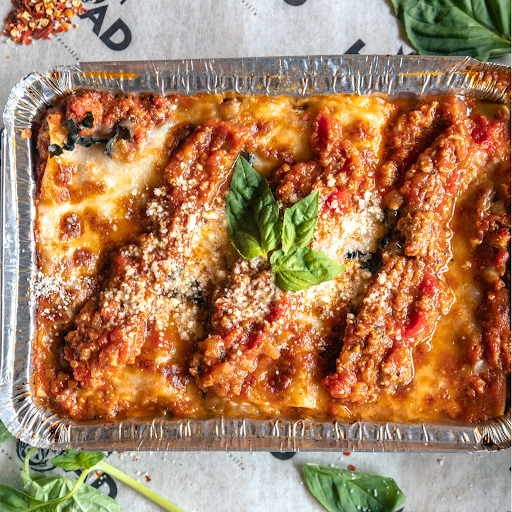
Last updated: June 10, 2026.
For reheated, frozen, or meat-filled lasagna, use 165 degrees F in the center as the safest practical target. The top may brown before the middle is hot, so check the thickest center layer with a food thermometer instead of relying only on bubbling sauce or melted cheese.
Quick Answer
| Lasagna situation | Safe target | What to check |
|---|---|---|
| Fresh lasagna with cooked sauce and cooked meat | Hot throughout; 165 degrees F is a safe center target | Center is hot, edges bubble, cheese is melted |
| Fresh lasagna with raw meat or poultry in the filling | Cook until the meat component reaches its safe minimum temperature | Ground beef/pork/lamb: 160 degrees F; poultry: 165 degrees F |
| Reheated leftover lasagna | 165 degrees F | Check the center, not just the edge |
| Frozen lasagna | 165 degrees F | Check several spots if the pan is large or uneven |
Where To Put The Thermometer
Insert the thermometer into the center of the lasagna, going into the thickest part of the layers without touching the pan. The pan and browned edges can be much hotter than the center, so a side reading can make underheated lasagna look done.
For a deep pan, check at least two places near the center. If one area reads below 165 degrees F, cover the top loosely with foil and continue heating until the cooler spot reaches temperature.
How To Tell Lasagna Is Done Without Guessing
- The center reaches the target temperature on a food thermometer.
- The sauce bubbles at the edges and in a few spots near the middle.
- The cheese is melted and lightly browned, not dry or burnt.
- A knife inserted into the center comes out hot, but this is only a backup check. A thermometer is better.
Baking Time Guide
Timing depends on pan size, starting temperature, sauce amount, noodle type, and whether the lasagna is fresh, chilled, or frozen. Use the times below as planning ranges, then confirm with temperature.
| Starting point | Oven setting | Typical range | Tip |
|---|---|---|---|
| Freshly assembled, room-temperature ingredients | 350 to 375 degrees F | About 35 to 55 minutes | Cover first, uncover near the end for browning |
| Chilled lasagna | 350 to 375 degrees F | About 50 to 75 minutes | Add time because the center starts cold |
| Frozen lasagna | Follow package or recipe directions | Often 60 minutes or longer | Cover until hot, then uncover briefly to brown |
| Leftover slice | 325 to 350 degrees F | About 15 to 30 minutes | Cover to prevent drying |
Resting Matters
Let lasagna rest for 10 to 15 minutes after baking. Resting helps the layers set so the slices hold together, and it lets heat finish evening out through the pan. Resting is not a substitute for reaching a safe center temperature first.
Food Safety Notes
- Refrigerate leftovers within 2 hours, or within 1 hour if the room is above 90 degrees F.
- Keep refrigerated leftovers at 40 degrees F or below.
- Use cooked leftovers within 3 to 4 days.
- Reheat leftovers to 165 degrees F before serving.
FAQ
Is lasagna done at 160 or 165 degrees F?
For a mixed dish such as lasagna, 165 degrees F in the center is the safest practical target, especially when reheating leftovers or cooking from frozen. Some ingredients have lower minimums, but the center of the casserole still needs to be hot throughout.
Can lasagna be safe if the top is brown but the middle is cooler?
No. Browning only tells you what happened at the surface. If the center is below the safe target, cover the lasagna loosely and keep heating until the middle reaches temperature.
Should I cover lasagna while baking?
Usually yes for the first part of baking. Foil helps the center heat without drying the top. Uncover near the end if you want more browning.
How long can leftover lasagna stay in the fridge?
Use refrigerated leftover lasagna within 3 to 4 days. Cool it promptly, store it covered, and reheat it to 165 degrees F.