Can You Freeze Sour Cream? The Dos and Don’ts!

– Sour cream can be frozen.
– Freezing sour cream can affect its quality and texture.
– Some manufacturers advise against freezing sour cream.
– Sour cream can be stored in a plastic bag, glass container, or silicone ice cube tray.
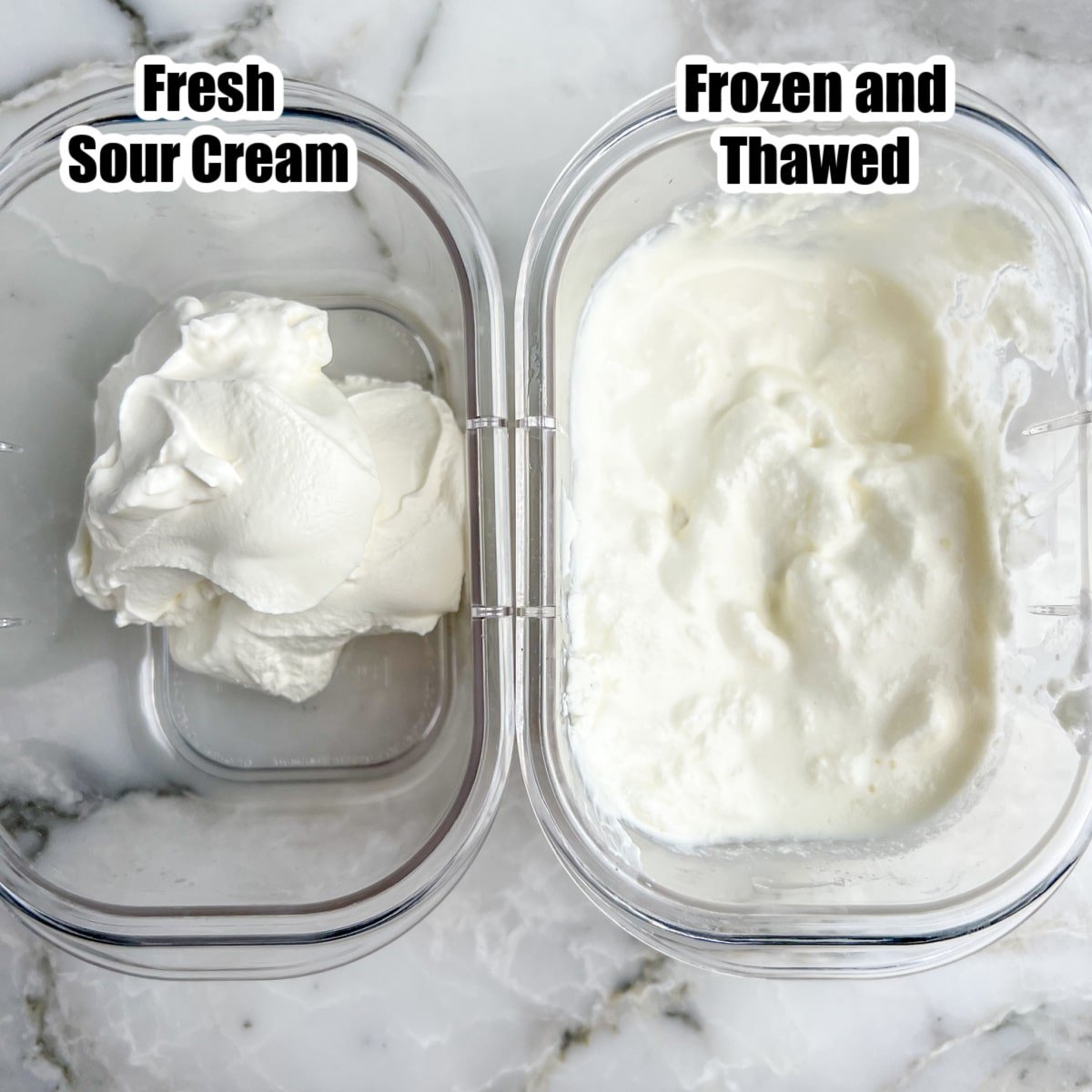
– Frozen sour cream can become lumpy or grainy once thawed.
– Adding a teaspoon of cornstarch to thawed sour cream can help restore its texture.
– Sour cream can safely last in the refrigerator for one to three weeks.
– Sour cream that has a bad smell, mold, or a yellow or discolored color may be spoiled.
– Sour cream is a dairy product rich in vitamins and minerals.

Continue Reading

Panko Bread Crumbs Substitute: Exploring Delicious and Nutritious Alternatives

– Panko breadcrumbs are made from crustless white bread that is processed into flakes and then dried.
– Panko breadcrumbs are a Japanese specialty but used worldwide for their crunchy texture.
– Panko breadcrumbs can be used as a crispy topping or can be fried.
– The article suggests several options for substituting panko breadcrumbs, including crackers, crushed pretzels, white bread, cereal, crushed potato chips, crushed tortilla chips, dry stuffing mix, corn flakes, coconut flakes, bread crumbs, nuts, matzo, and toasted rice.
– The article provides a recipe for making a panko substitute using a food processor and baking the crumbs until lightly toasted.
– Tips for making the panko substitute include using stale bread, using parchment paper for easy clean-up and crispier results, and spreading the substitute thinly on a baking sheet.
– Regular breadcrumbs can be substituted for panko breadcrumbs in most recipes, but the results may not be as crispy.
– Panko substitute breadcrumbs can be stored at room temperature in an airtight container for up to two weeks.
– They can also be stored in the fridge for up to a month, or in the freezer for up to three months.
– A recipe is provided for making panko substitute breadcrumbs using crackers in a food processor.
– Other options for panko substitutes include crushed pretzels, white bread, cereal, potato chips, tortilla chips, stuffing mix, corn flakes, coconut flakes, bread crumbs, nuts, matzo, and toasted rice.
– Tips are provided for making the crispiest panko substitute, such as using a large baking sheet and avoiding overbaking.
– The nutritional information for the panko substitute made with crackers is provided.

Continue Reading

Can You Freeze Coconut Milk? A Comprehensive Guide

– Freezing coconut milk is a simple and effective way to preserve it.
– Canned coconut milk can be frozen, but the texture may become slightly lumpy after thawing.
– It is best to use fresh coconut milk for freezing.
– Opened canned coconut milk lasts up to 5 days in the refrigerator.
– Unopened canned coconut milk can last for 2 to 5 years in the pantry.
– Frozen coconut milk can last for up to 6 months.
– When freezing coconut milk, leave at least ½ inch of headspace in the container for expansion during freezing.
– Smaller portions of coconut milk can be frozen using silicon trays, plastic zip top bags, or ice cube trays.
– Label the container or bag with the date before placing it in the freezer.
– To defrost frozen coconut milk, it is advised to place it in the refrigerator for 24 to 48 hours.
– Alternatively, it can be microwaved in short bursts or placed in a bowl of lukewarm water for 30 minutes.
– After thawing, the coconut milk should be stirred to re-integrate the texture.
– Once thawed, frozen coconut milk can be used in most recipes that call for it.

Continue Reading

How to tell if pumpkin pie is done: essential tips for perfect results

– Use a digital thermometer to check the internal temperature, which should be between 175-185 degrees Fahrenheit
– Gently shake the pie, and if the center jiggles slightly but the outer edges are set, it is done
– The crust should be golden brown
– Baking time for a pumpkin pie is typically around 50-60 minutes at 350 degrees Fahrenheit
– Avoid overbaking the pie to prevent a cracked top and rubbery texture
– Three tests to determine doneness: the knife test, the instant-read thermometer test, and the jiggle test
– The knife test involves inserting a knife into the center of the pie, and if it comes out clean, the pie is done
– The instant-read thermometer test recommends checking that the internal temperature of the pie reaches at least 180°F
– The jiggle test involves gently shaking the pie, and if it jiggles slightly in the center without being liquidy, it is done
– Tips on avoiding cracks in the pie when testing for doneness such as not overcooking, watching for small bubbles in the filling around the edges, and ensuring the filling doesn’t separate from the crust
– Do not overbrown the edges of the pie pastry
– Cool the pie according to recipe instructions
– Other creative takes on pumpkin pie to try during the fall and winter holidays.

Continue Reading

Can You Freeze Cooked Turkey Safely and Deliciously?

List of pertinent information about freezing cooked turkey:
– Leftover turkey can be kept in the fridge for up to four days before freezing.
– Freezer-proof zipper top bags are suggested for freezing turkey to remove excess air and minimize air contact with the food.
– Turkey can be frozen for up to six months, but it is recommended to use it within three months to maintain flavor and avoid freezer burn.
– Freezer burn can be prevented by minimizing air contact with the food.
– The recommended method for defrosting frozen turkey is to place it in the refrigerator for at least one day, up to two days for larger quantities.
– Microwave defrost settings can also be used, but may vary depending on the microwave.
– Do not thaw turkey or any meat at room temperature to prevent bacterial growth.
– In certain recipes like soups and stews, frozen turkey can be added directly without defrosting.
– Reheating leftover turkey can be done in a baking pan with a small amount of broth in a 300°F oven or in the microwave using a microwave-safe container.
– To freeze leftover turkey, it is advised to slice or dice the meat, place it on a covered baking sheet in a single layer, chill it in the freezer for an hour until firm, and then transfer it to a labeled freezer-proof bag or container.
– Leftover turkey can be frozen on the bone if wrapped tightly.
– Label the container with the type of turkey, date, and amount.

Continue Reading

How to Cook Jimmy Dean Breakfast Sandwiches Like a Pro

Instructions for cooking a Jimmy Dean breakfast sandwich:
– Always follow heating instructions.
– Keep the sandwich frozen until ready to use.
– It can be refrigerated overnight to thaw.
– Do not refrigerate for longer than 3 days.
– Directions were developed using an 1100-watt microwave oven.
– Heating times may need to be adjusted as ovens vary.
From Frozen:
1. Remove the sandwich from the wrapper and wrap it in a paper towel.
2. Microwave on defrost (30% power) for 1 minute 30 seconds or until thawed.
3. Turn the sandwich over and microwave on HIGH for 55 seconds or until hot. For compact microwave ovens lower than 850 watts, add 10-20 seconds if needed.
4. Let the sandwich stand in the microwave for 1 minute before serving.
From Refrigerated:
1. Remove the sandwich from the wrapper and wrap it in a paper towel.
2. Microwave on HIGH for 50 seconds or until hot. For compact microwave ovens lower than 850 watts, add 5-10 seconds if needed.
3. Let the sandwich stand in the microwave for 1 minute before serving.

Continue Reading

How to thicken tomato sauce: simple tips and tricks

Methods to Thicken Tomato Sauce:

1. Letting the sauce reduce by simmering for a long time.
2. Adding starch:
– Making a cornstarch slurry by mixing equal parts cold water and cornstarch.
– Substituting arrowroot powder for cornstarch.
– Adding mashed potatoes or instant potato flakes.
– Making a roux with butter and flour.
– Using breadcrumbs to soak up water.
3. Adding shredded Parmesan cheese.
4. Adding cheese early in the cooking process.
5. Adding tomato paste.
6. Mixing an egg yolk with a cup of tomato sauce and adding it back to the pan.
7. Adding mashed vegetables like cauliflower, carrots, and onions.
8. Combining a thicker tomato sauce with the homemade sauce.
9. Adding cream cheese.
10. Using clear gel to thicken homemade sauce.
11. Adding leftover pasta water.
12. Adding meat to the sauce.
– Ground beef, Italian sausage, pork sausage, or stew meat.
13. Using ground almonds to thicken tomato sauce.
– Almond flour is effective for gluten-free options.
14. Adding lemon juice to thicken the sauce.
– Half a lemon is sufficient for a large pan of sauce.

Continue Reading