Cauliflower

Cauliflower Vs Broccoli – What is The Difference?

Broccoli and cauliflower have different similarities and differences, some of these differences are white and black, or we could say white and green. You might be surprised by some of them. Usually, broccoli and cauliflower are served interchangeably or together in several meals in many homes and that makes it odd to say one without […]

Continue Reading

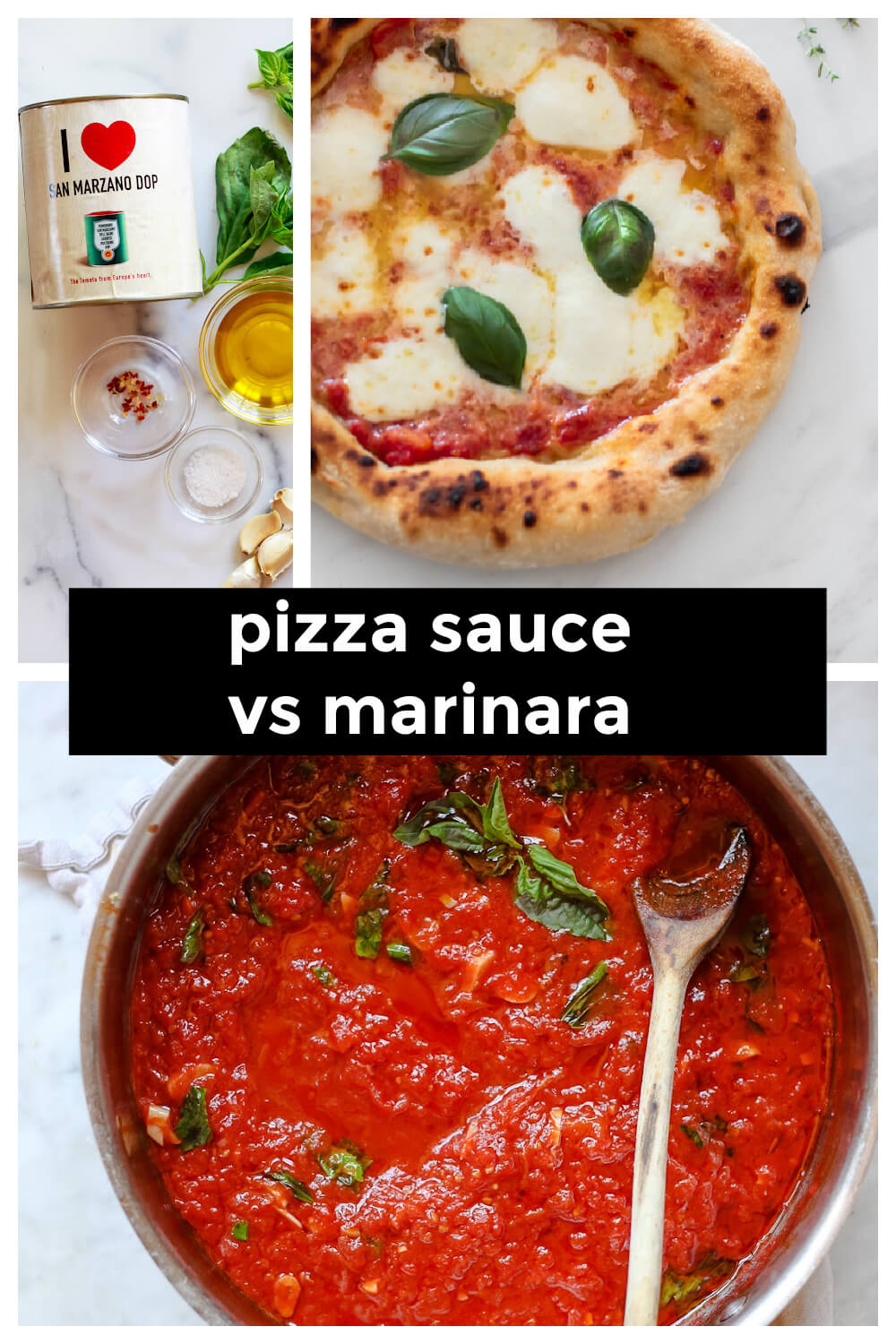
Pizza sauce vs marinara: Unraveling the delicious differences

– Pizza sauce and marinara are both types of tomato sauce made with similar ingredients.
– Pizza sauce is meant as a base for pizza toppings, while marinara is a traditional tomato sauce meant as a pasta sauce or dipping sauce.
– Authentic Italian versions of both sauces are made with simple basic ingredients such as peeled plum tomatoes, garlic, and basil.
– American pizza sauce usually has spices added to it, while marinara is simpler with just tomatoes, garlic, and herbs.
– Pizza sauce tends to be more flavorful and have a thicker consistency than marinara.
– Pizza sauce can often be made without cooking before going on the pizza dough, while marinara sauce is always simmered on the stove.
– The biggest differences between pizza sauce and marinara are that marinara is typically slow-simmered, while pizza sauce can be prepared quickly.
– Marinara has a deeper and richer flavor profile, while pizza sauce uses fewer spices and herbs.
– Marinara is thinner than pizza sauce.
– Pizza sauce is usually non-cooked pureed tomatoes with minor herbs and spices added.
– Marinara sauce is usually chunkier and has more complex flavors than pizza sauce.
– Some suggested uses for marinara sauce include spaghetti dishes and chicken dishes.

Continue Reading

Tostadas vs Chalupas: Exploring the Delicious World

– Tostadas and chalupas are both types of Tex-Mex cuisine.
– Tostadas are made from fried tortillas and have a crunchy texture.
– Tostadas serve as a base for various toppings such as beans, meat, and seafood.
– Chalupas are made from corn dough and shaped like a shallow cup or bowl.
– Chalupas are traditionally topped with salsa, cheese, and lettuce.
– Chalupas are generally not made from stale tortillas and require the dough to be made and pressed before frying.
– In America, Taco Bell has a popular version of the chalupa that is topped with lots of ingredients and meat but differs from the traditional chalupa in terms of shape and bread type.
– The shape is the biggest difference between tostadas and chalupas.
– Tostadas are flat and can be made from either corn or wheat tortillas, while chalupas are curved and usually made from corn-based dough.
– Tostadas are typically more protein-heavy than traditional chalupas.
– The article provides instructions on making homemade tostadas through baking or frying methods.
– It also mentions that there are various recipes available online for making traditional chalupas, with one Taco Bell recipe included among them.
– The article compares various Mexican dishes such as chalupas, gorditas, quesalupas, chimichangas, tacos, tostadas, sopes, and tostaguacs.
– It explains the differences between these dishes in terms of their ingredients, shapes, textures, and how they are prepared.
– It mentions that chalupas are fried, specially-shaped tortillas topped with various ingredients, while tacos are made with flat tortillas and have more protein-heavy toppings.
– Gorditas are thick tortillas filled with beans, meat, or other ingredients, while chalupas are not filled but topped with ingredients.
– Quesalupas are similar to chalupas but have a lining of melted cheese.
– Chimichangas are deep-fried burritos, whereas chalupas are not burritos and are a traditional Mexican food.
– Tostadas are fried or baked tortillas that remain crisp and act as a plate, while tacos are softer and can be folded.
– Sopes are thicker than tostadas, have a raised border, and are not made from leftover tortillas.
– Tostaguacs are tostadas with guacamole on top.
– Chalupas are fried tortillas with toppings, while tacos are made with flat tortillas.
– Chalupas are generally lighter than tacos in terms of toppings.
– Gorditas are thick corn tortillas with a pocket in the middle filled with beans, pork, beef, or papas con chile.
– Chalupas do not have a pocket and are topped with toppings instead of being filled.
– Chalupas are usually deep-fried, while gorditas are not.
– Quesalupa is a Taco Bell dish similar to chalupa but with a lining of melted cheese.
– Chimichangas are deep-fried burritos with rice, beans, meat, cheese, and vegetables (optional).
– Chalupas are traditional Mexican food, while chimichangas are Mexican-American born.
– Tacos have a soft corn tortilla shell, while tostadas are fried or baked tortillas that remain crisp.
– Tostadas are flat and act as a plate, while tacos can be folded and are more pliable.
– Sopes are thicker than tostadas and have a raised border to prevent toppings from spilling.
– “Tostaguac” refers to a tostada with guacamole on top.
– Tostadas are different from tortas.

Continue Reading

Durian vs Jackfruit: Unveiling the exotic fruits’ distinctive characteristics

– Durian and jackfruit are two different tropical fruits that are often compared due to their similar appearance and origin in Southeast Asia.
– Durian is larger and heavier than jackfruit with a spiky exterior and a strong, distinct aroma.
– Jackfruit is more elongated and has a bumpy exterior with a milder aroma.
– Durian has sweet, custardy flesh and creamy texture.
– Jackfruit has a sweet and tropical flavor.
– Durian is banned in some public places.
– Durian is considered the “king of fruits.”
– Jackfruit seeds are edible and can be used in various dishes.
– Durian is native to Southeast Asia, specifically Indonesia, Malaysia, and Thailand.
– Jackfruit is native to South Asia, specifically India and Bangladesh, and is also widely grown in Southeast Asia.
– Durian trees can grow over 160 feet tall with spiky trunks and large, glossy leaves.
– Jackfruit trees are smaller, growing up to 65 feet with smooth gray bark and rounded leaves.
– Durian measures around 6 to 8 inches in diameter and weighs 2 to 7 pounds.
– Durian has a spiky, greenish-brown exterior.
– Jackfruit has a more elongated shape.
– Durian has a sharp, triangular spiked exterior while jackfruit has a rough, green exterior with blunt, knobby spikes.
– Durian fruit is smaller, growing up to 35 inches in diameter and weighing up to 40 pounds. Jackfruit is much larger, growing up to 35 inches in diameter and weighing up to 40 pounds or more.
– Durian has a strong, pungent odor described as a mix of rotten onions, gym socks, garbage, and sweet custard. Jackfruit has a sweet, tropical aroma often compared to a blend of banana, pineapple, and mango but with a twist of rotting onion odor.
– Durian has a creamy texture like custard with a sweet, buttery flavor, while jackfruit has a fibrous, chewy texture with a sweet, tropical flavor often compared to a blend of pineapple, mango, and banana.
– 1 cup of durian contains approximately 357 calories, 13 grams of fat, 66 grams of carbohydrates, 9 grams of fiber, and 4 grams of protein. The same amount of jackfruit contains approximately 157 calories, 2 grams of fat, 38 grams of carbohydrates, 2.6 grams of fiber, and 2.4 grams of protein.
– Durian is higher in vitamins and minerals such as vitamin C, vitamin B6, potassium, and iron. Jackfruit is higher in vitamin A and magnesium.
– Durian is often eaten raw or used in sweet desserts and pastries. It can also be used to flavor savory dishes. Jackfruit is versatile and can be used in both sweet and savory dishes. The fibrous texture makes it a popular vegetarian meat substitute.
– Both durian and jackfruit come from different tree species and belong to different plant families. Durian belongs to the family Malvaceae and the genus Durio, while jackfruit belongs to the family Moraceae and the genus Artocarpus.
– Durian is not universally banned, but it is restricted in some public places due to its strong and distinctive odor.
– Durian trees can only be grown in the U.S. in Hawaii due to their sensitivity to cold temperatures.
– The high cost of durian is mainly due to limited availability and high demand.
– Jackfruit has a distinctive smell, often described as a mix of banana, pineapple, and rotting onion. Ripe jackfruit is sweet with a flavor similar to a mix of banana, pineapple, and mango. Unripe jackfruit is starchy and less sweet, with a flavor and texture more similar to a vegetable.
– Both durian and jackfruit are classified as fruits because they develop from the ovary of a flower and contain seeds.
– Jackfruit seeds are edible, oval or kidney-shaped, and have a brown, hard outer shell.
– The seeds can be boiled, roasted, or fried and used in a variety of dishes.
– Durian is known as the “king of fruits” due to its unique combination of flavor, texture, and aroma.
– Durian has a sweet, custardy flesh with a creamy texture.
– Durian has a distinctive and strong aroma that can be described as heavenly or revolting.
– Durian is highly prized and sought-after in Southeast Asia and other parts of the world.
– Durian is considered a symbol of status and luxury.
– Both durian and jackfruit are beloved and celebrated fruits in Southeast Asia.

Continue Reading

Edamame vs Soybeans: Nutritional Differences, Health Benefits, Cooking

– Edamame beans are soybeans that are harvested when they are still young and tender.
– Edamame beans are typically eaten as a fresh steamed vegetable.
– Soybeans are left to mature and harden.
– Edamame beans are served fresh, often steamed.
– Soybeans are used to make various soy products such as tofu, soy milk, and soy sauce.
– Both edamame and soybeans are a good source of protein.
– Edamame provides 18.2 grams of protein per 100 grams.
– Mature raw soybeans contain 36.5 grams of protein.
– Edamame beans are low in calories.
– Edamame beans have 172 calories per 1/2 cup serving.
– Roasted soy nuts and whole raw soybeans contain 449 calories.
– Edamame beans have a low count of carbohydrates.
– Edamame beans have 8.4 grams of carbs per 100 grams.
– Dry roasted soy nuts and whole raw soybeans contain about 30 grams of carbs.
– Both edamame and soybeans are low in saturated fat and do not contain cholesterol.
– Raw mature soybeans contain 19.9 grams of total fat.
– Edamame beans contain 9 grams of total fat.
– Edamame beans contain 1,981 milligrams of monounsaturated fat and 5,064 milligrams of polyunsaturated fat per 100 grams.
– Raw soybeans contain 4,404 milligrams of monounsaturated fat and 11,255 milligrams of polyunsaturated fat per 100 grams.
– Raw soybeans have higher amounts of essential minerals compared to edamame beans.
– Soybeans have higher percentages of calcium, iron, potassium, magnesium, zinc, copper, manganese, phosphorus, and selenium compared to edamame beans.
– Edamame beans contain less thiamin, riboflavin, vitamin B5, vitamin B6, and folate compared to soybeans.
– Edamame and soybeans are high in fiber.
– A 1/2 cup of raw soybeans contains 37% of the daily value of fiber.
– Edamame beans contribute 24% of the daily value of fiber in the same-sized serving.
– The fiber content in soybean products and edamame may help lower cholesterol.
– Soybeans and edamame contain compounds such as antioxidants, isoflavones, lecithins, and saponins that have protective effects on the heart.
– Increased consumption of soybeans and edamame is recommended for a cardioprotective diet.
– Soybeans and edamame are rich in minerals important for bone health.
– Soy isoflavones have shown potential positive effects on bone health by reducing bone resorption and stimulating bone formation.

Continue Reading

Sporks: Metal Utensils That Revolutionize Eating Experience

List of pertinent information to the keyword “sporks metal”:

1. The spork is made of Japanese titanium.
2. It is designed to be ultralight and compact.
3. It is suitable for camping, backpacking, and daily use.
4. The spork is made in Japan.
5. It comes with a lifetime product guarantee.
6. The current price is $16.61.
7. The reviewer bought the spork as a gift for their partner.

Continue Reading

Gyoza vs Dumpling: Delve into the Art of Asian Dumplings

– Jiaozi is commonly served as a side dish or snack in Asia.
– Dumplings originate from China and are made of wheat flour dough wrapper filled with meat and/or vegetables.
– Dumplings can be steamed, pan-fried, deep-fried, or boiled.
– Gyoza is the Japanese cousin of jiaozi.
– Gyoza is a more recent innovation that originated in Japan during World War II.
– Gyoza has a thinner dumpling wrapper and more finely chopped stuffing.
– Gyoza is most commonly pan-fried to create a crispy texture and enhance its flavors.
– Dumplings and gyoza have different flavor, texture, and cooking techniques.

Continue Reading

Transform Your Artistic Skills with an Innovative Air Brush Kit: Master Techniques in Precision Painting

– Airbrush kits for beginners
– One-box options for airbrush kits
– Five categories of paints for airbrushing
– Acrylic paints for airbrushing
– Inks and dyes for airbrushing
– Oil paints for airbrushing
– Urethane paints for airbrushing
– Watercolors for airbrushing
– Jacquard Airbrush Colors
– JVR Revolution Kolor extra fluid series
– Pro-Color acrylic airbrush paints
– Tamiya Acrylic Paints
– Vallejo Metal Color
– Vallejo Mecha Color
– Vallejo Model Air paints
– Vallejo Model Color
– Vallejo Model Wash
– Vallejo Game Air colors
– Vallejo Premium RC Colors

Continue Reading