
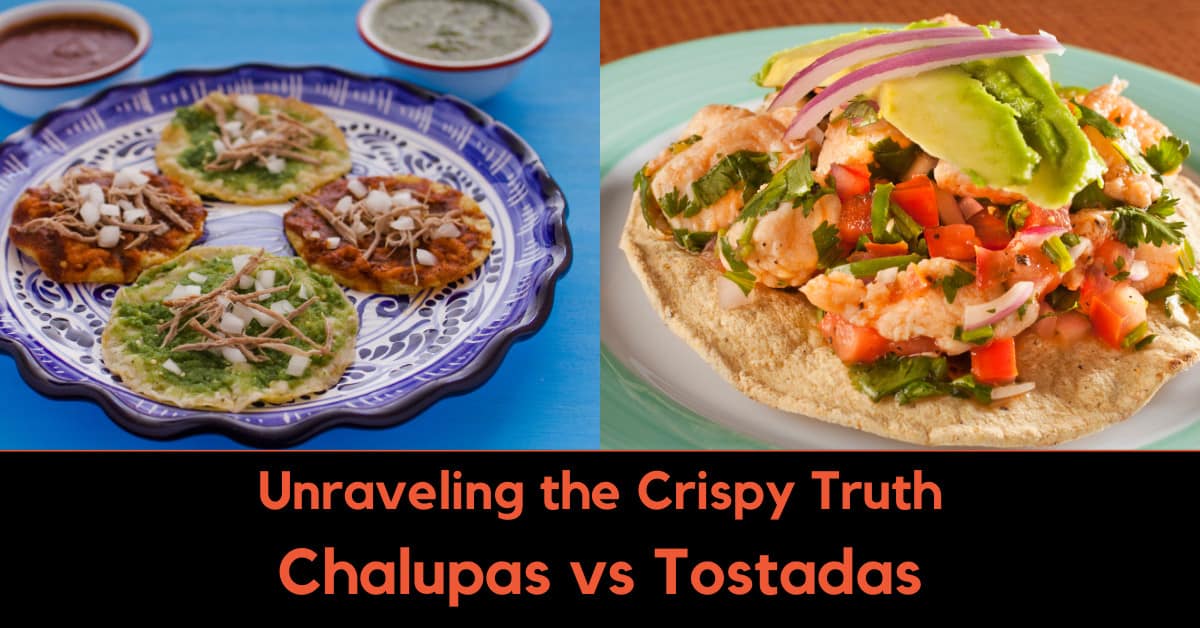
A tostada is a crisp, flat corn tortilla topped with beans, meat, seafood, vegetables, salsa, or cheese, while a traditional chalupa is a small fried corn base with a shallow rim that holds a lighter layer of salsa and toppings. Chalupa styles vary widely by region, so shape and toppings are not universal.
Tostada vs Chalupa at a Glance
| Feature | Tostada | Traditional chalupa |
|---|---|---|
| Base | Crisp corn tortilla | Small corn tortilla or masa base |
| Shape | Flat | Often shallow with a pinched or raised edge |
| Texture | Dry and crunchy | Fried, but may remain softer than a tostada |
| Toppings | Often layered generously | Frequently salsa, onion, cheese, or shredded meat |
| Variation | Many regional topping styles | Meaning changes significantly by region |
What Is a Tostada?
A Mexican tostada begins with a crisp corn tortilla. It may be toasted, dried, or fried, then eaten plain or used as a flat base. Common toppings include refried beans, shredded meat, seafood, lettuce or cabbage, cheese, crema, salsa, avocado, and pickled chiles.
The flat shell behaves like an edible plate. Spread heavier ingredients evenly and keep wet salsa modest so the tortilla stays crisp. Because it does not fold, a tostada is usually eaten by lifting it carefully with both hands.
What Is a Traditional Chalupa?
Chalupa is a regional name rather than one fixed nationwide formula. Larousse Cocina describes Puebla-style chalupas as small tortillas whose edges are pinched while fresh to hold red or green salsa. Mexico’s Cultural Information System describes the Puebla version as thin, small, fried without becoming fully crisp, and topped simply with salsa, onion, and shredded meat.
Other regional dishes called chalupas can look closer to tostadas. That is why a rigid statement such as “all chalupas are boat-shaped shells” is misleading.
Texture and Eating Difference
Choose a tostada when you want a pronounced crunch and room for several toppings. Choose a Puebla-style chalupa when you want a smaller, softer fried base where salsa and the corn flavor remain central.
Neither format requires one specific protein. A tostada can be vegetarian or seafood-based, and a chalupa can be served with a small amount of shredded meat or without it, depending on the regional style.
Traditional Chalupas vs Fast-Food Chalupas
American fast-food chalupas are a separate interpretation. They commonly use a thick, folded fried shell and are filled like a taco. That format should not be used as the definition of a Puebla chalupa.
If you have leftovers of any folded fast-food version, follow texture-preserving methods from the site’s guide to reheating tacos. A flat tostada is best assembled immediately before eating because wet toppings soften it quickly.
Related Mexican Dishes
- Taco: a tortilla folded around fillings rather than served flat.
- Gordita: a thicker masa cake that may be split and filled.
- Sope: a thick masa base with a raised rim.
- Quesadilla: a folded tortilla centered on cheese or another filling; see the site’s corn tortilla quesadilla guide.
For another regional taco filling, the site’s buche tacos guide explains that dish separately rather than treating all Mexican antojitos as interchangeable.
Frequently Asked Questions
Are chalupas always hard and crunchy?
No. Puebla-style chalupas are fried but may remain relatively soft. Fast-food versions often use a thicker, crunchy folded shell.
Can a tostada be made from a flour tortilla?
The traditional Mexican definition centers on a crisp corn tortilla. Restaurants may use other tortillas, but that is a variation rather than the clearest baseline definition.
Which one holds more toppings?
A tostada usually offers more flat surface area for layered toppings. Traditional chalupas are smaller and often use a simpler topping combination.