Home Meat Slicer: Unlocking Culinary Potential at Home
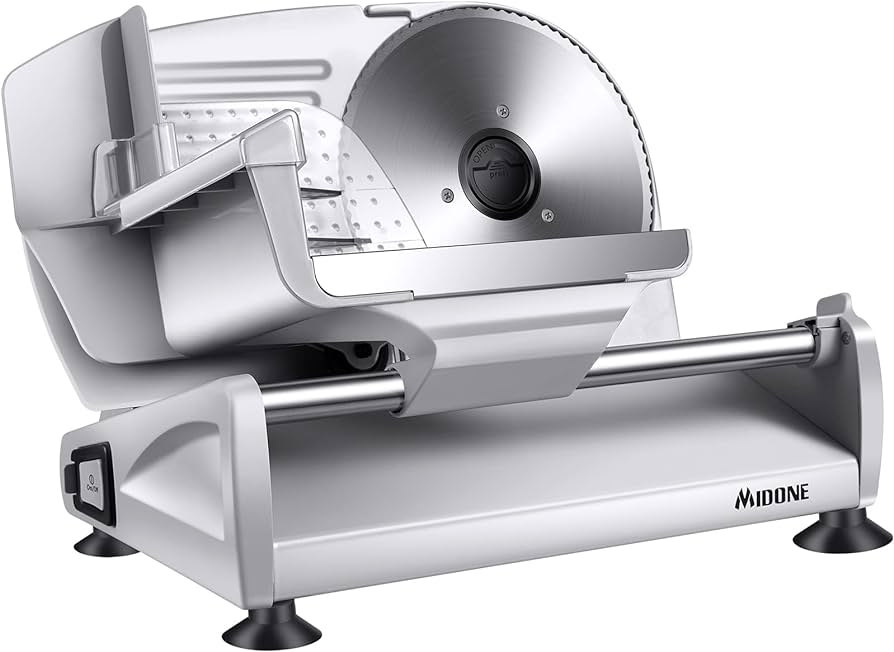
– A good meat slicer is helpful for processing large quantities of meat, vegetables, or cheese.
– The 7.5″ Electric Meat Slicer from Meat! Your Maker is recommended as the top pick for most people.
– The MEAT! Your Maker 7.5″ slicer is suitable for light slicing needs, while the 10″ version is better for slicing large slabs of bacon.
– The slicer is easy to use and store, with adjustable thickness and an extended tray for cutting a moderate volume of meat at one time.
– It has suction cup feet to keep it stable and an aluminum housing, although some parts are still plastic.
– The 7.5″ stainless steel blade is sharp and easy to remove for cleaning.
– The only downside is that there are some plastic parts, including the gears.
– A home meat slicer called the Meat! 7.5″ slicer is described as being able to handle household slicing tasks and is reasonably priced.
– It is noted that the blade is serrated and can tear and shred meat at thinner sizes, and is difficult to sharpen.
– The slicer is also said to have small crevices that make cleaning the base tedious.
– The article also mentions the Chef’s Choice 615A Electric Meat Slicer, which is popular for home use and can handle light commercial use.
– It has easy-to-clean, removable parts and a stainless steel coating.
– The slicer also has a powerful motor, but only comes with a serrated blade initially and struggles to achieve thinnest cuts.
– Finally, the BESWOOD 10″ Premium Chromium-Plated Electric Meat Slicer is described as a commercial-grade slicer that can compete with expensive models.
– It is heavy at 35lbs and is made entirely of stainless steel.
– The blade of the slicer is made of carbon steel coated with chromium, protecting against corrosive damage and improving lifespan.
– The meat slicer has a V-shaped feeding belt for the motor, making it quiet and soft-vibrating.
– It has a large 10″ blade, ideal for cutting big chunks of meat into narrow slices.
– The blade is difficult to remove for cleaning, requiring unscrewing it from the slicer.
– The Elite Platinum EMT-625B is an affordable option made of die-cast aluminum, preventing rust damage and improving durability.
– The meat slicer has easy-to-adjust thickness settings and a safety guide to keep track of food as it is guided towards the cutting blade.
– The motor is slow and makes a loud noise in the kitchen.
– The quality of components varies from higher to middling quality depending on the part.
– Most major parts of the meat slicer are removable.
– The meat holder is plastic and flimsy, and it is recommended to hold the meat in place with your hand.
– The slicer can run hot after approximately 10 minutes of use, requiring cooldown time.
– It has built-in whetstones for sharpening the blades and a stainless steel blade for durability.
– The slicer has a waterproof cover to protect the electronics from water damage.
– It is heavier than expected, weighing almost 50 pounds.
– The slicer has a 180W motor, making it powerful for slicing through thicker pieces of meat.
– The blade is made of stainless steel, while the food press is made of die-cast aluminum.
– Entry-level slicers usually have blades around 7 to 10 inches, while more powerful slicers are between 12 to 14 inches.
– Most commercial meat slicers have blades around 12 inches.
– Safety features or guards are important to avoid injury while using a meat slicer.
– Automatic meat slicers are easier to use and better for larger quantities of meat.
– Manual meat slicers are intuitive to use and don’t require much prep time.
– Automatic slicers often have a manual setting for finer cutting control.
– Cleaning legs or kickstands make cleaning the meat slicer easier.
– The size of the meat tray determines how much meat can be cut in succession.
– Proper cleaning of the meat slicer is essential, including detaching and cleaning removable parts separately.
– Periodically sharpening the blade of a meat slicer is necessary for good results.
– Meat slicer kits may come with sharpener attachments, or a separate sharpener tool may be required.
– Thoroughly clean and oil the blade before sharpening.
– The motor power and blade size should be considered when buying a meat slicer.
– A meat slicer should not be used to cut completely frozen meat, as it can damage the blade.
– Some expensive slicers can handle partially frozen meat.
– Thorough cleaning is necessary when raw meat is sliced to prevent cross-contamination.
– Cutting through bone with a meat slicer is not recommended, as it can damage the blade.
– Regular cleaning and sanitizing of the meat slicer is necessary to prevent bacterial contamination.
– Sanitizer concentrate and water should be used for cleaning, avoiding regular soap.
– Gloves should be worn when using sanitizer, as it can be harsh on the skin.
– Thoroughly rinse and dry the slicer after sanitizing to prevent rust.
– Lubricate the moving parts of the slicer with a food-grade lubricant.
– The LG LW1821ERSM is a smart air conditioner that can be controlled through LG ThinQ technology, Amazon Alexa, or Google Assistant.
– It is suitable for cooling large rooms up to 1,000 sq. ft. and is Energy Star certified.
– The unit has 3 cooling and fan speeds, a 24-hour timer, and a 4-way air deflection feature.
– It also has an auto restart function in case of a power outage.
– Additional features include a remote control, easy window installation kit, washable filter, and a check filter alert.