Taro Vs Ube: A Colorful Comparison of Root Vegetables

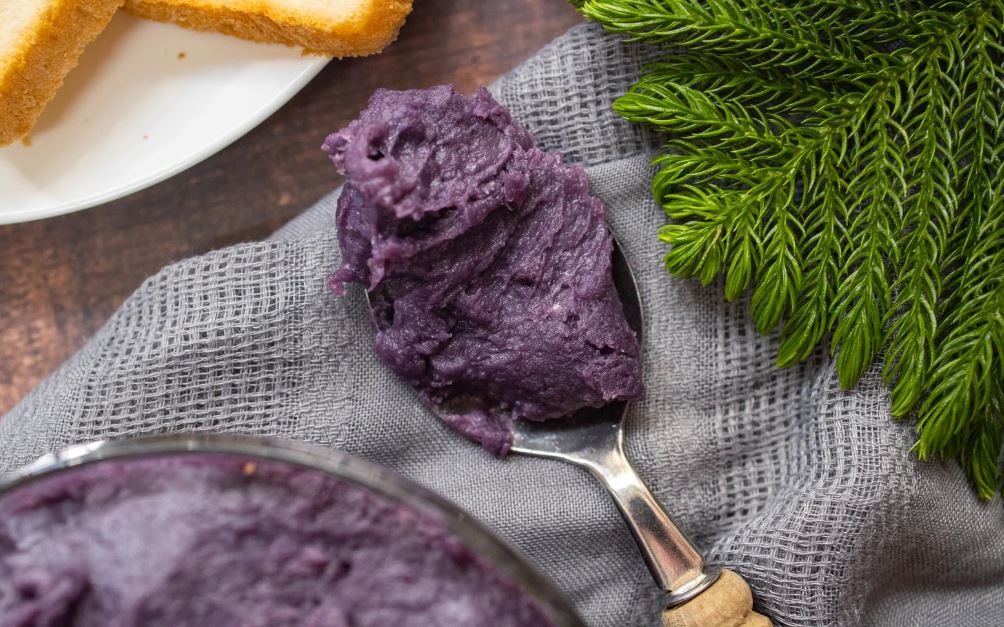
Ube is a root vegetable known as “purple yam” that originates from the Philippines. It is rich in fiber, antioxidants, carbohydrates, potassium, and vitamin C. Ube may help prevent diabetes by stabilizing blood sugar. Ube has a purple color, becomes even darker when cooked, and has a creamy texture. The flavor of ube is sweet with nutty, vanilla undertones. Ube is commonly used in boba tea and to flavor ice cream in the United States. In Filipino cuisine, ube is boiled, mashed with condensed milk, and used in sweet treats such as jam or coconut ube pudding. Ube is also used to color bread, cakes, and other baked goods.

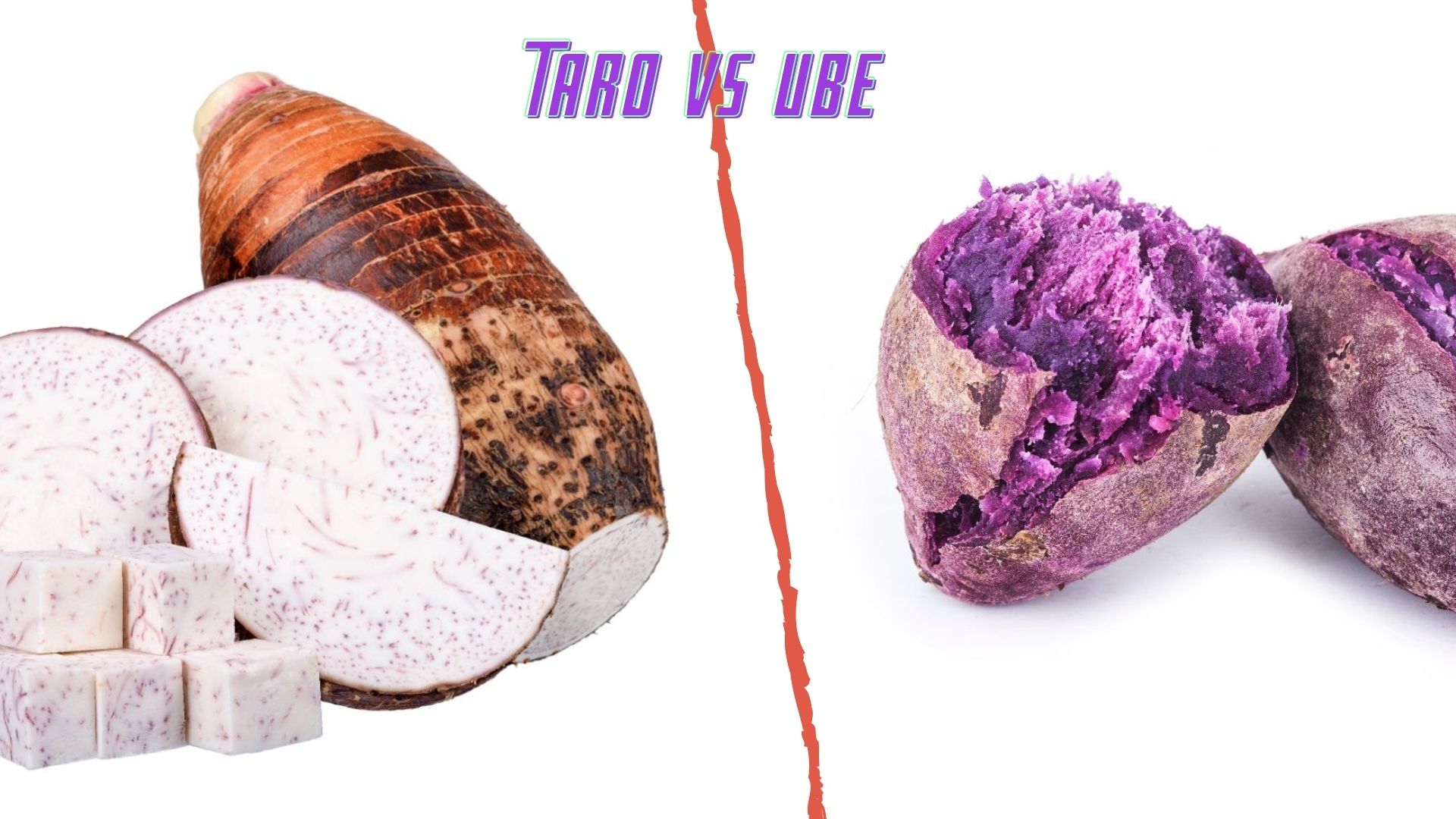
Taro is a tuber that originated in Southeast Asia and is also found in India, Hawaii, and Australia. Taro is used in cuisines across Africa, India, and the South Pacific Islands. The name taro comes from a Māori word meaning “bread,” and it is believed to be one of the earliest domesticated crops. Taro is a heart-healthy and fiber-rich food. Taro and ube are both starchy tubers commonly used in milk teas, desserts, and savory dishes. Ube is from the Philippines, while taro is grown in various tropical regions. Ube has dark purple flesh and taro has light-colored flesh with purple specks. Both have a subtly sweet taste with nutty and vanilla undertones, but ube is sweeter than taro. Ube is usually used in desserts, while taro is used in both desserts and savory dishes. It is important to note that both the flesh and leaves of the taro plant are toxic and should be cooked properly to avoid illness. Taro and ube are different plant species with distinct textures, flavors, and nutritional profiles. Ube is sweeter than taro. Both can be used in desserts and boba tea, especially when paired with coconut.

Continue Reading

What Does Ube Taste Like? A Deliciously Purple Exploration

1. Ube: Ube is a purple potato that is becoming popular in the United States. It is used in various desserts, such as ice creams and cakes, in trendy coffee shops and dessert eateries.
2. Passion fruit: Passion fruit is described as being acidic, tart, and surprisingly sweet. It pairs well with fruits such as papaya, melons, banana, mangoes, and vanilla, as well as milk-based foods like yogurt and custard.
3. Rambutan: Rambutan is a tropical fruit with a sweet taste and strawberry notes. It can be consumed raw or used in fruit salads, drinks, sorbets, and smoothies.
4. Jackfruit: Jackfruit can be eaten ripe or used in dishes such as tacos, fruit salad, smoothies, fritters, jam, and bread. It pairs well with mangoes, pineapples, bananas, and coconut, as well as sweeteners like molasses and brown sugar.
5. Mangosteen: Mangosteen has flavors reminiscent of pineapple, strawberry, and lychee. It can be eaten raw, used in fruit salads, smoothies, ice cream, or traditional Asian desserts. It pairs well with strawberries, bananas, papayas, passionfruit, and pineapple.
6. African Mangosteen: It has a sour, tart, and slightly sweet taste with mango-like undertones. It is primarily used for ornamental decor.
7. Lychee: Lychee has a cross between watermelon and strawberry taste. It is often eaten raw or used in fruit salads, smoothies, and Asian desserts.
8. Papaya: Papaya has a mild and slightly sweet taste with a creamy and spoonable texture. It can be eaten as-is, used as a base for smoothies, or as toppings for yogurt bowls, salsa, or jam.
9. Guava: Guava is a tropical fruit with a green-yellow outer skin and pink or white center. It can be used in recipes or eaten on its own, and pairs well with various fruits and flavors.
Note: The article does not provide specific statistics or figures about the taste of ube.

Continue Reading

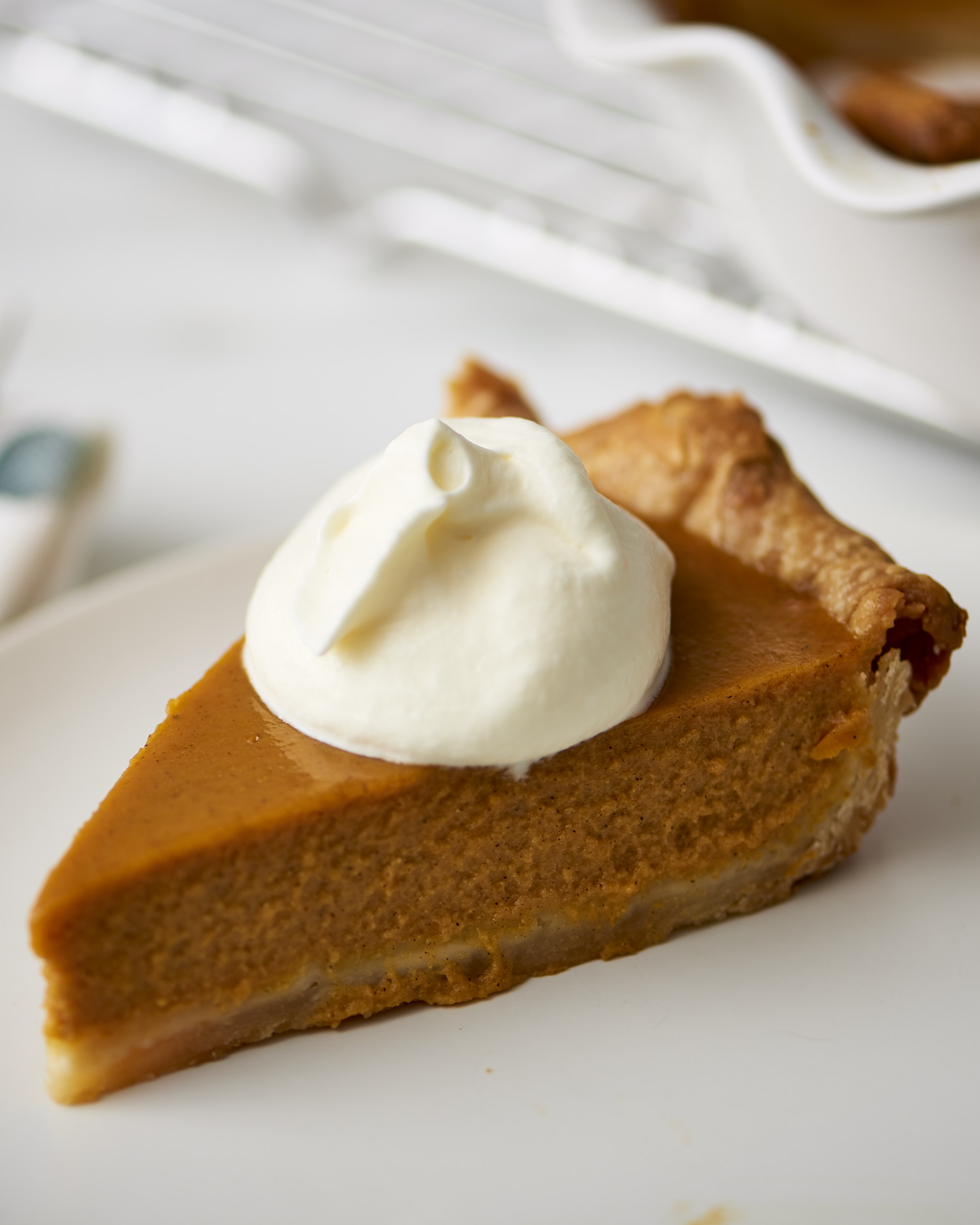
How to tell if pumpkin pie is done: essential tips for perfect results

– Use a digital thermometer to check the internal temperature, which should be between 175-185 degrees Fahrenheit
– Gently shake the pie, and if the center jiggles slightly but the outer edges are set, it is done
– The crust should be golden brown
– Baking time for a pumpkin pie is typically around 50-60 minutes at 350 degrees Fahrenheit
– Avoid overbaking the pie to prevent a cracked top and rubbery texture
– Three tests to determine doneness: the knife test, the instant-read thermometer test, and the jiggle test
– The knife test involves inserting a knife into the center of the pie, and if it comes out clean, the pie is done
– The instant-read thermometer test recommends checking that the internal temperature of the pie reaches at least 180°F
– The jiggle test involves gently shaking the pie, and if it jiggles slightly in the center without being liquidy, it is done
– Tips on avoiding cracks in the pie when testing for doneness such as not overcooking, watching for small bubbles in the filling around the edges, and ensuring the filling doesn’t separate from the crust
– Do not overbrown the edges of the pie pastry
– Cool the pie according to recipe instructions
– Other creative takes on pumpkin pie to try during the fall and winter holidays.

Continue Reading

The Ultimate Guide: How to Air Fry Cookie Dough to Perfection

– Baking refrigerated cookie dough in an air fryer is a quick and easy way to satisfy a chocolate chip cookie craving.
– Air frying cookie dough in an air fryer results in a crispy exterior and a chewy center.
– Parchment paper can be used in an air fryer to bake cookies, making cleanup easier.
– A standard air fryer can fit about 4 cookies.
– The cookies should be air fried at 320ºF for 6-8 minutes or until they are browned on top.
– The cookies should cool in the basket for 5 minutes before being removed.
– Other easy air fryer recipes include mozzarella sticks, mini corndogs, frozen French fries, cinnamon rolls, and frozen tater tots.
– Use parchment paper to prevent sticking and do not overcrowd the air fryer basket.
– The cookies can be served on their own or with various options for dipping or filling.
– The cookies can be stored in an airtight container for up to 5 days.
– Various brands of refrigerated cookie dough can be used, including Nestle toll house or homemade dough.
– Unwrap the cookie dough and transfer it to the air fryer basket, spacing the dough evenly.
– Bake at 350°F (180°C) for 6 to 8 minutes.
– The recipe is for 12 servings.
– The calorie count is approximately 165 calories per serving.
– Baking subsequent batches may require less cooking time as the air fryer will be preheated.
– Baked cookies can be frozen for up to 3 months.
– Air fryer temperatures may vary, so it is recommended to check for doneness and adjust cooking time as needed.
– The article provides links to the author’s Instagram, Pinterest, Tiktok, and YouTube channels for more recipes and updates.
– There is a recommendation to join an exclusive Facebook group for air fryer recipes.

Continue Reading

Sugar Free Jello: An InDepth Guide to Healthy Desserts

– Sugar-free Jello is keto-friendly, containing zero carbs and only 10 calories
– A cup of strawberry sugar-free Jello has 0g total fat, 0mg cholesterol, 45mg sodium, 0mg potassium, 0g total carbohydrate, 0g dietary fiber, 0g total sugars, and 1g protein.
– It has 0 grams of net carbs, making it suitable for a low-carb diet.
– The ingredients in sugar-free Jello could mimic sugar and potentially spike blood sugar and increase insulin response.
– Sugar free Jello is made with a variety of chemicals, preservatives, and artificial sweeteners such as aspartame and maltodextrin.
– There are 9 sugar free flavors available.
– Sugar free Jello pudding is not carb-free and contains around 9g net carbs, making it not ideal for the keto diet.
– Sugar free Jello is not considered keto-friendly in a strict sense but may fit into a dirty or lazy keto plan.
– The article discusses sugar-free Jello options for those who are watching their sugar intake or following a ketogenic diet.
– Sugar-free Jello pudding is a variant of traditional Jello pudding formulated for reduced sugar intake.
– It provides a satisfying and flavorful dessert option without added sugars.
– Sugar-free Jello pudding has evolved due to the demand for healthier alternatives in the dessert industry.
– Sugar-free Jello pudding is low in sugar and calories, with approximately 60-70 calories per serving.
– A single serving of sugar-free Jello pudding contains around 8-10 grams of carbohydrates.
– Sugar-free Jello pudding typically contains less than 1 gram of sugar per serving.
– It is low in fat, with less than 1 gram per serving, and cholesterol-free.
– Sugar-free Jello pudding provides small amounts of protein from milk and gelatin.
– It is fortified with essential nutrients like calcium and iron.
– Artificial sweeteners like aspartame, sucralose, or acesulfame potassium are used in sugar-free Jello pudding.
– Thickeners such as modified cornstarch or carrageenan are added to achieve the desired texture of sugar-free Jello pudding.
– Sugar-free Jello pudding is typically made with skim milk, which contains approximately 45 calories, 4 grams of protein, and essential vitamins and minerals.
– The main benefit of sugar-free Jello pudding is the reduced sugar content compared to regular Jello pudding.
– Sugar-free Jello pudding is a low-calorie option for those watching their calorie intake.
– Sugar-free Jello pudding comes in various flavors and is easy to prepare, making it a convenient dessert option.
– Individuals should consider their personal dietary requirements and consult a healthcare professional before incorporating sugar-free Jello pudding into their diet.
– Sugar-free Jello pudding is a guilt-free way to satisfy sweet tooth cravings while still providing important nutrients.
– Sugar-free Jello pudding is made with alternative sweeteners instead of traditional sugar.
– Sugar-free Jello pudding can be consumed by individuals with diabetes, but overall carbohydrate intake should be monitored as part of a balanced meal plan.
– Sugar-free Jello pudding generally has fewer calories than regular Jello pudding because it does not contain added sugars.
– The specific calorie content may vary depending on the brand and flavor.
– The alternative sweeteners used in sugar-free Jello pudding are considered safe for consumption by regulatory authorities, although some individuals may have sensitivities or experience gastrointestinal discomfort.
– It is advisable to consult a healthcare professional if there are concerns.
– Sugar-free Jello pudding can be included in a weight loss diet due to its lower calorie content, but overall calorie intake should be considered and a balanced diet should be maintained to achieve weight loss goals.

Continue Reading

Unleash your creativity with this delectable Fruity Pebbles Cake: A colorful and scrumptious dessert masterpiece!

Ingredients:
– Fruity Pebbles cereal
– Standard pantry ingredients for homemade vanilla buttercream

Equipment:
– Mixing bowls
– Baking pans
– Strainer
– Electric mixer (handheld or stand mixer)
– Medium and large mixing bowls
– Measuring cups and spoons
– Whisk
– Spatula
– Two 9-inch cake pans

Instructions:
1. Preheat the oven to 350ºF.
2. Grease or spray two 9-inch cake pans with butter-flavored cooking spray.
3. In a mixing bowl, beat softened butter and sugar together until light and fluffy.
4. In a separate bowl, combine flour, baking powder, and salt.
5. Add egg whites and vanilla to the butter and sugar mixture, followed by the dry ingredients and cereal milk.
6. Fold in the remaining Fruity Pebbles.
7. Divide the batter between the prepared cake pans.
8. Bake for 25-30 minutes or until a toothpick comes out clean.
9. Let the cakes cool for 5 minutes in the pans, then transfer them to cooling racks to cool completely.
10. In a medium bowl, whip softened butter, powdered sugar, and vanilla bean paste to make the homemade vanilla buttercream frosting. Add milk if needed to achieve desired consistency.
11. Once the cakes are fully cooled, frost them with the buttercream.
12. Decorate with additional Fruity Pebbles if desired.

Facts about Fruity Pebbles:
– Fruity Pebbles cereal was first introduced in 1971.
– It is marketed as an excellent source of vitamins and minerals.
– Fruity Pebbles is gluten-free but not vegan-friendly.
– In a ¾ cup serving, there are 9 grams of sugar.

Tips for storing the cake:
– The frosted cake can be stored at room temperature for 2-3 days, covered with plastic wrap or a cake dome if sliced.
– It can also be refrigerated for up to a week or frozen for about 2 months.
– To eat a frozen slice, defrost it in the refrigerator overnight.

Other cereal options:
– Other cereals like Fruit Loops, Cap’n Crunch, or Cinnamon Toast Crunch can be used in this recipe but would need to be chopped.
– Cocoa Pebbles can also be used as a substitute.

Additional information:
– Cereal milk is made by pouring cereal into milk and letting it sit for at least 30 minutes to infuse flavor.
– Cereal milk became popular through a bakery called Milk Bar.
– This recipe also provides instructions for making homemade vanilla buttercream frosting.
– The nutritional information for the cake is provided, with 875 calories, 121g of carbohydrates, 5g of protein, and 43g of fat.

Continue Reading