Why is marinara pizza sauce a staple?

– Marinara sauce is a simple tomato-based sauce traditionally made with tomato puree, salt, and pepper.
– It does not contain any additional ingredients like herbs or garlic.
– Marinara sauce is thin and does not have any chunks or tomato skins.
– Pasta sauce can refer to any sauce paired with pasta, including pesto, bolognese, Alfredo, and marinara.
– It typically contains a mixture of tomato products, herbs, garlic, onion, and more.
– American pasta sauces are often thicker and chunkier than traditional Italian sauces.
– Sauce tomate, a French-influenced take on Italian red sauces, includes tomato products, seasoning, pancetta or another cured pork product, meat stock, and sometimes a roux for thickening.
– In Italy, marinara sauce is a simple tomato sauce made with garlic, olive oil, and sometimes basil or oregano.
– In America, marinara sauce is often referred to as “pasta sauce.”
– Bolognese sauce is a traditional Italian meat sauce made with tomato paste, ground meat, and a sofrito of carrots, onions, and celery.
– In America, it is often called “meat sauce” or “spaghetti sauce,” and it is made with ground beef and sometimes sofrito vegetables, along with crushed tomatoes or tomato passata.
– American meat sauce is usually seasoned with dry herbs and cooked for a shorter time period compared to traditional Italian bolognese sauce.
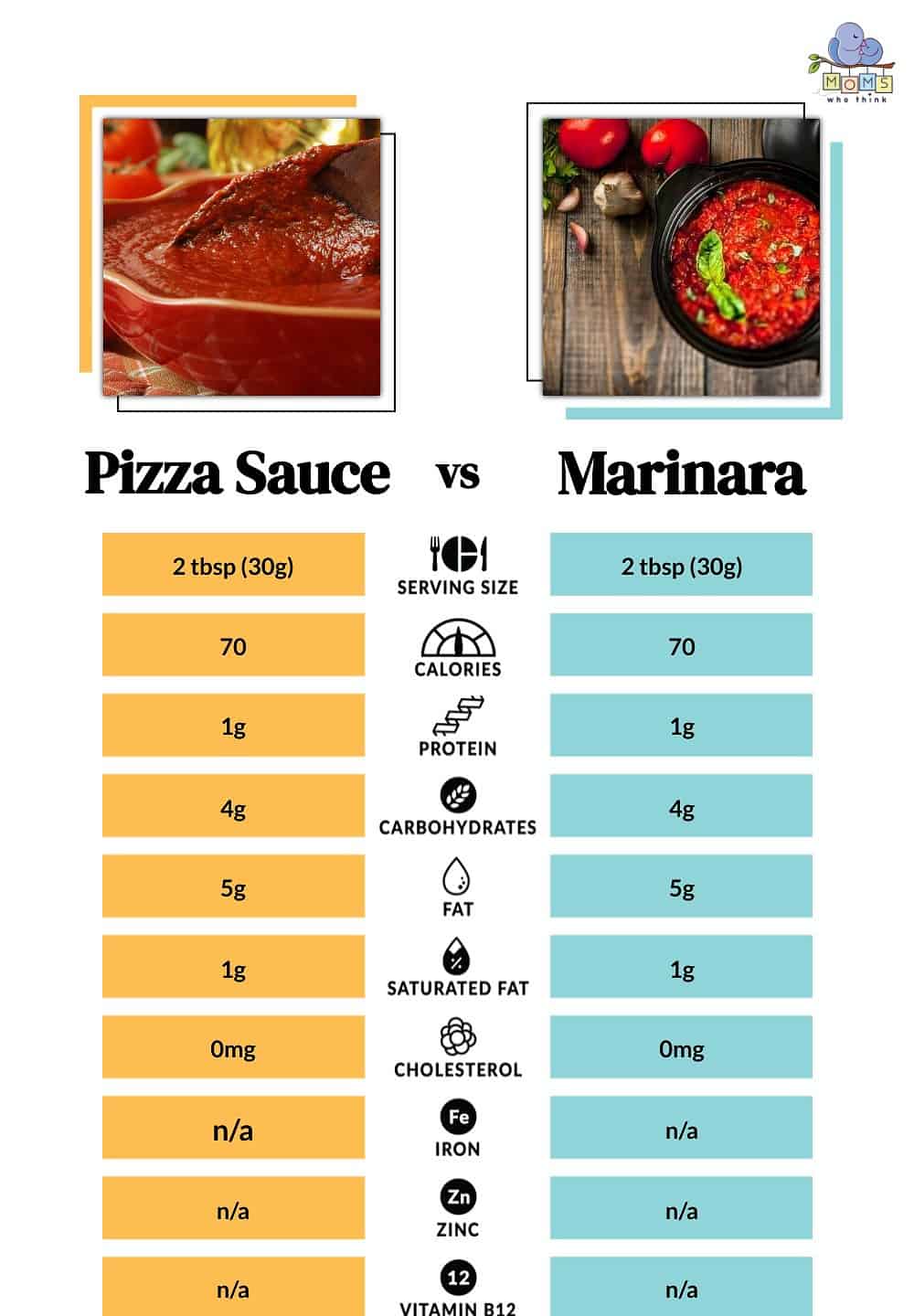
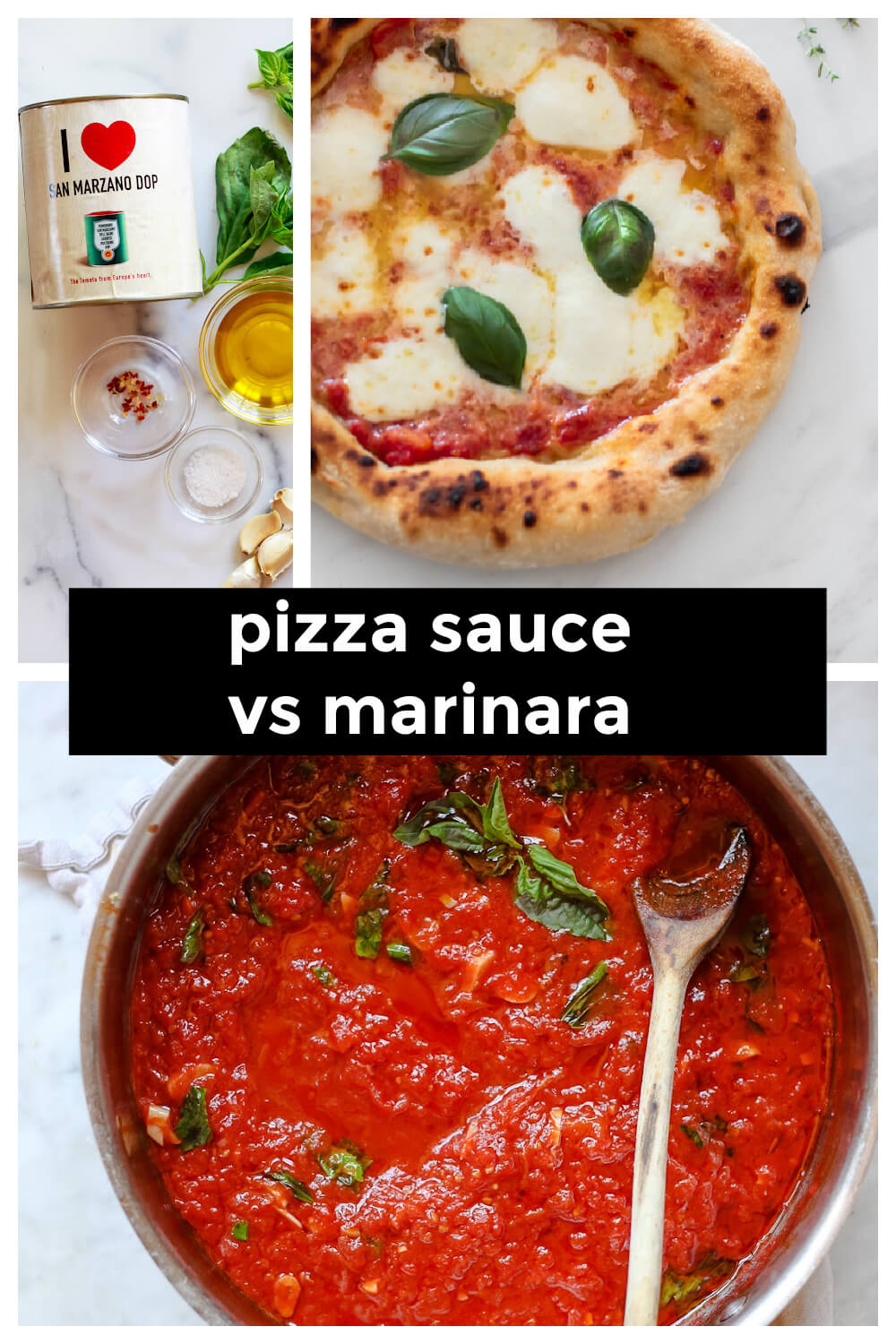
– Pizza sauce and marinara are both types of tomato sauce made with similar ingredients.
– American-style pizza sauce tends to be thick, pasty, and heavily seasoned, while traditional Neapolitan pizza sauce is simple and made with San Marzano tomatoes, basil, salt, sometimes garlic, and olive oil.
– Marinara is a traditional tomato sauce meant for pasta, while pizza sauce is meant as a base for toppings.
– Authentic Italian versions of both sauces are made with basic ingredients like peeled plum tomatoes, garlic, and basil.
– American pizza sauce usually has added spices, while marinara is simpler with just tomatoes, garlic, and herbs.
– Marinara is often used as a pasta or dipping sauce, while pizza sauce is used as a pizza topping.
– Pizza sauce can be made without cooking before going on the pizza dough, while marinara is simmered on the stove.
– Marinara is a type of spaghetti sauce, but there are likely variations in ingredients and cooking methods.
– Spaghetti sauce, also known as ragu, is a red sauce that contains additional ingredients like onions, carrots, celery, and meat.
– Bolognese is a similar type of sauce that is thinner and made with white wine.
– Marinara sauce is a simple, low-calorie tomato sauce that can be used as a pizza sauce.
– Pizza sauces can vary in thickness and flavor.
– Italian pizza sauces are often similar to marinara.
– It is possible to use pasta sauce such as marinara as a pizza sauce, depending on personal preference.
– The key is to choose a high-quality sauce made with few ingredients.

Continue Reading

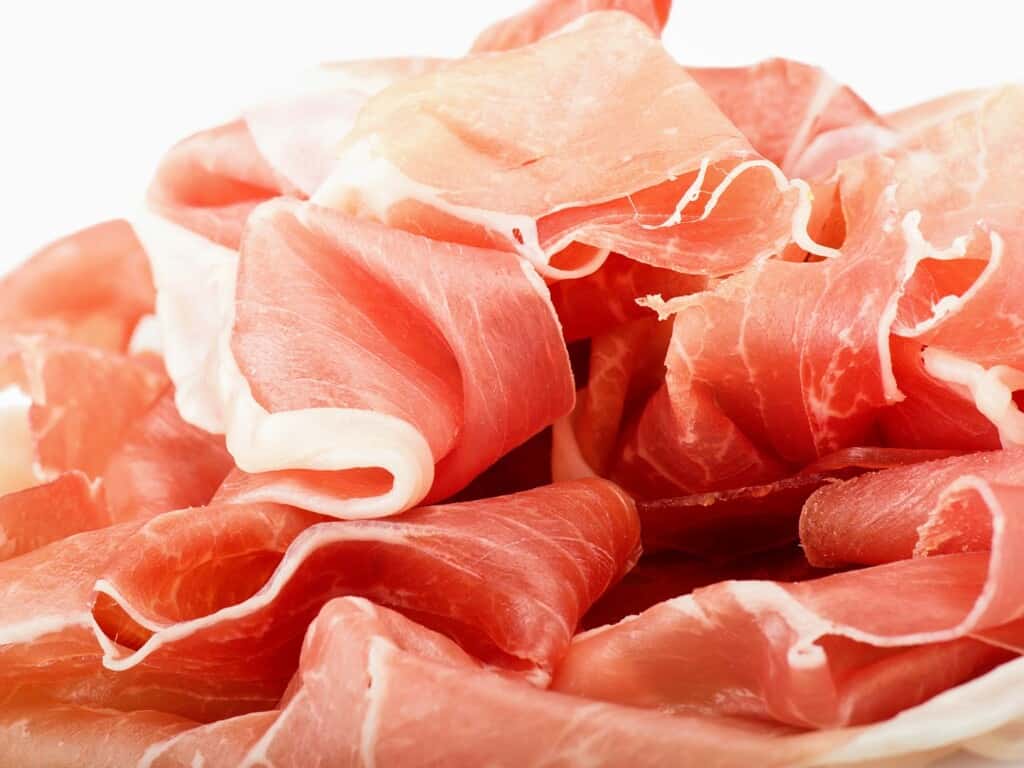
Is Prosciutto Raw? The Truth About Cured Meats

List of pertinent information about prosciutto being raw:

1. Prosciutto is a cured meat.
2. Dry-cured prosciutto, such as Parma ham, can be eaten raw.
3. There are two main types of prosciutto: Crudo and Cotto.
4. Crudo prosciutto is dried, not raw, and undergoes a minimum of 12 months of drying and curing.
5. Cotto prosciutto is smoked and cooked like deli ham and does not undergo the same drying and preservation process.
6. Prosciutto made in Italy follows strict rules and uses high-quality pork.
7. Some prosciutto may contain additional ingredients, such as nitrates, for color, taste, and preservation.
8. The dry-curing process involves building up natural penicillin on the meat for protection and using salt to inhibit bacterial growth and draw out moisture.
9. Prosciutto can be eaten in a sandwich or wrapped around melon.
10. Cooking prosciutto intensifies its saltiness.
11. The Romans used prosciutto for taste and preservation due to the lack of refrigeration.

Continue Reading

Italian vs French Cuisine: A Delectable Gastronomic Rivalry

Italian and French are both considered romantic languages and are similar in many ways. They are both part of the Romance language family and share traits such as using the Latin alphabet, having similar grammatical syntax, and focusing on grammatical gender and verb conjugations. They also have a similar sentence order to English. According to a Babbel survey, French and Italian are considered the sexiest accents in the world. However, despite their similarities, they are not highly mutually intelligible due to differences in pronunciation. French vocabulary has been influenced more heavily by German and English loanwords, while Italian has more straightforward pronunciation and predictable spelling.

Italian and French have different pronunciation and grammar rules. Italian pronunciation is sharp and uses intonation and hand gestures, while French pronunciation is more fluid with nasal sounds and vowel clusters. French is easier when it comes to plural forms as you generally just add an “s”, while Italian has irregular plural forms. Both languages are similar in complexity and difficulty. Italian is easier to pronounce and understand due to its musical intonation and fewer sounds and vowels.

French is spoken by 267 million people and is the official language in 29 countries, making it more useful to know for business, diplomacy, travel, tourism, and hospitality. Italian, on the other hand, is important in fashion, automotive, food, wine, and tourism industries.

The choice of which language to learn depends on personal interests, industry needs, and geographic location. Learning one Romance language can make it easier to learn others in the future.

In conclusion, both Italian and French have their own unique characteristics and uses. The decision of which language to learn should be based on personal preferences and goals.

Continue Reading

Pizza sauce vs pasta sauce: Which one to choose?

– The primary difference between pizza sauce and pasta sauce is the cooking method.
– Pizza sauce is uncooked, while pasta sauce is slow-cooked.
– Pizza sauce is layered between uncooked dough and unheated cheese, while pasta sauce is added to cooked pasta.
– Cooking pizza sauce once results in a fresher tomato flavor.
– Pizza sauce has a higher concentration of tomato paste, while pasta sauce often combines tomato paste with water to create a “tomato puree.”
– Pizza sauce typically has simpler ingredients such as garlic, oregano, basil, and olive oil.
– Pasta sauce can have additional ingredients such as olives, onions, peppers, salt, sugar, and meats.

Continue Reading

The History and Cultural Significance of Italian Dunkers: Exploring the Origins, Recipes, and Traditions

List of Pertinent Information:

1. Italian Dunkers is a dish made with hot dog buns or ciabatta bread.
2. The bread is slathered in garlic butter.
3. Mozzarella cheese is added as a topping.
4. Italian seasoning and marinara sauce are used as flavorings.
5. The recipe involves air frying or toasting the bread until the cheese is bubbly and starting to brown.
6. Suggestions for variations and dipping sauces are provided.
7. Instructions for preparing and storing the dish are given.
8. Alternative bread and cheese options can be used.
9. Additional tips for using leftovers and reheating are provided.

Continue Reading

What is Crudo? Exploring the Origins, Unique Preparation, and Delicious Variations

– Italian crudo: a simple version of crudo dressed with lemon, olive oil, and salt
– Japanese sashimi: traditionally not dressed with oil, but often served with citrus-based ponzu or soy-based sauces
– Ono’s sashimi dishes: lean more towards crudo or ceviche, with a combination of seasonal fruit and lime juice with fish
– Crudo: Italian and Spanish word for “raw,” refers to a dish of uncooked fish, shellfish, or meat dressed with seasoning
– Carpaccio: a type of crudo where the uncooked stuff is sliced thin and often dressed with olive oil and lemon
– Tartare: another type of crudo made with raw meat or seafood that is chopped up and bound with sauce or dressing
– Sashimi: a raw preparation not in the crudo category, made with carefully sliced raw fish rarely marinated, sauced, or garnished
– Ceviche: a cousin of the crudo family, made with raw seafood marinated in citrus juice to “cook” it and transform its texture
– Tiradito: a dish from Nikkei cuisine, a mash-up of raw fish sliced thinly like carpaccio or sashimi, often marinated for a short period of time
– Different cultures have different ways of making raw food delicious, and combining these traditions can result in great dishes.

Continue Reading

Pizza Marinara: Uncovering the Origins and Authentic Recipe

– Pizza marinara is a style of pizza in Neapolitan cuisine
– It is seasoned with only tomato sauce, extra virgin olive oil, oregano, and garlic
– It is supposedly the oldest tomato-topped pizza
– The recipe dates back to around the year 1735
– Historically, it was known to be commonly ordered by poor sailors and made on their ships due to it being made from easily preservable ingredients
– The recipe includes olive oil, cherry tomatoes, basil, oregano, and garlic
– The addition of tomatoes was considered an extra for both marinara and margherita pizzas
– The recipe can also include small fish, mozzarella slices, prosciutto, tomatoes, and wedge clams
– The process of making the pizza involves placing peeled tomatoes in the center of the pizza base, covering the entire surface with the sauce, slicing and scattering garlic, sprinkling oregano, and pouring extra virgin olive oil over the pizza
– In pizzerias in Rome, the recipe is commonly modified with additional ingredients
– Pizza marinara is a classic Neapolitan pizza that originated in Naples, Italy
– It does not have cheese and is topped with only tomato sauce, thinly sliced garlic, and oregano
– Pizza marinara and pizza Margherita are the most classic Neapolitan pizzas
– Pizza marinara is usually baked in a wood-fired oven at high temperatures
– Some sources state that pizza marinara originated as early as the mid-1700s in Naples
– The flavor of pizza marinara depends on the quality of the ingredients
– San Marzano tomatoes are preferred for Neapolitan pizzas, but fire roasted tomatoes can also be used for a sweeter flavor
– Canned fire roasted tomatoes are available at mainstream grocery stores and online
– The recipe for pizza marinara includes a quick and easy pizza sauce made with fire roasted tomatoes, garlic, olive oil, dried oregano, and salt
– The dough for pizza marinara is thin in the middle and poofed on the outside
– The article mentions that a pizza stone is needed to achieve the most authentic pizza marinara, as it helps to make the crust crispy on the bottom and soft on the inside
– A pizza peel is also recommended for transferring the pizza onto the pizza stone in the oven
– The article mentions that a pizza oven is not necessary but provides information on an inexpensive pizza oven
– The article ends by suggesting other pizza recipes

Continue Reading

What to Serve with Chicken Marsala: Delicious Side

– Chicken marsala is an Italian-American dish made with chicken cutlets, mushrooms, and marsala wine.
– It is often served with pasta or mashed potatoes and garlic bread, but can be served with a variety of other side dishes.
– 15 side dish options are provided in the article.
– Brown rice is suggested as a simple and perfect side for pouring marsala sauce over.
– Crispy smashed baby potatoes are recommended as an alternative to mashed potatoes.
– Serving chicken marsala with egg noodles is popular, and doubling the sauce is recommended for topping the pasta.
– Roasted green beans topped with parmesan cheese are suggested as a flavorful side.
– Mushroom risotto, made with Arborio rice, mushrooms, cheese, and seasonings, is a classic Italian dish that pairs well with chicken marsala.
– A creamy and rich casserole with a crunchy topping is recommended as a side dish.
– Another option is a slow cooker cheesy dish that complements the flavors of chicken marsala.
– Cheesy potatoes cooked in a crock pot
– Roasted veggies
– Buttery Texas toast
– Mashed potatoes with fresh herbs
– Garlic mashed potatoes
– Mashed sweet potatoes
– Roasted sweet potatoes
– Roasted russet potatoes
– Greek roasted potatoes
– Balsamic vinegar roasted potatoes
– Broccoli with homemade cheese sauce
– Brown sugar Brussels sprouts
– Double-cheese baked spaghetti squash

Continue Reading